Best gravel races in Europe 2026: the ultimate guide for every level of rider
The best gravel races in Europe in 2026, with a special focus on Aurora Gravel Rally Series in Cyprus, Switzerland and Portugal.

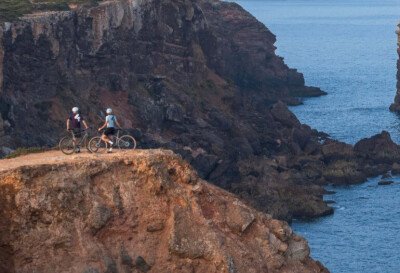
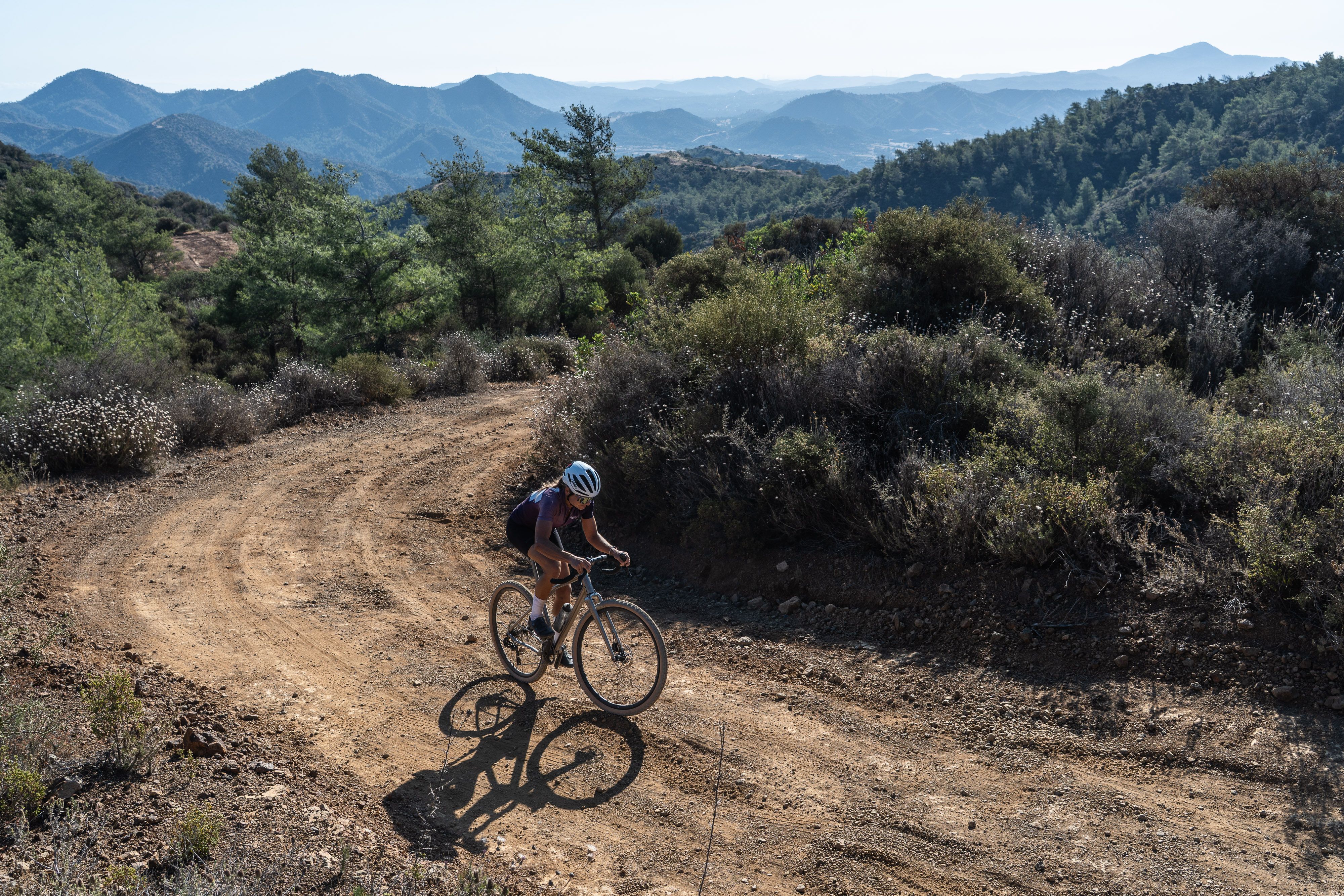
This guide covers the best gravel races across Europe right now, with particular attention to Aurora Gravel Rally Series, one of the freshest and most intriguing concepts to emerge from the scene in recent years.
What makes a great gravel race in Europe?
Not every event with "gravel" in its name deserves the label. The best European gravel races share a handful of qualities that separate them from a sportive with a few extra muddy corners.
Terrain authenticity. The best events use roads and tracks that actually belong to the landscape, not just farmland bypasses strung together on a map. Ancient mule paths, forest ranger tracks, shepherd trails, these are the surfaces that make gravel riding feel like discovery rather than exercise.
Format innovation. The old model of mass starts and chip timing still works for many people, but the most interesting events of the current era are experimenting with rally timing, stage formats, bikepacking integration, and social programming that turns a race into a proper trip.
Community over competition. Gravel culture has always valued the rider who finishes last but finishes happy. Events that cultivate this atmosphere, through communal dinners, festive evenings, and route design that rewards exploration, tend to become the ones riders return to year after year.
Destination value. Flying your bike to race in a stunning corner of Europe is a major commitment. The best events justify that commitment by being set somewhere genuinely extraordinary, where the surrounding landscape, food, and culture add layers of meaning to the riding itself.
With those criteria in mind, here is a close look at the events worth putting in your calendar.
Aurora Gravel Rally series: the new standard in gravel adventure
Aurora Gravel Rally Series is a multi-stage gravel series born from what its founders describe as their accumulated kilometres together and a desire to ride on the trails, far from the noise but close to what matters. The series takes place across three very different European destinations and uses a rally timing format that is genuinely distinct from anything else on the gravel calendar.
What is rally timing and why does it change everything?
Rather than timing the entire route from gun to tape, Aurora uses selective timing sections on each stage. Two to three timed sectors per day represent roughly two fifths of the total distance. The remaining sections are liaison stages, ridden at your own pace following GPX tracks, with route marking at key intersections.
This format has several real advantages. Riders are not penalised for stopping to take in a panorama or chat to a local farmer. The sections that are timed tend to be the most technically interesting stretches of trail. And the overall classification rewards consistent performance across several days rather than a single explosive effort.
It is, in short, a format that rewards riders who are good at gravel riding rather than those who are primarily good at suffering.
The yellow SOX: what is that?
One of Aurora's most charming touches is the Yellow SOX, their equivalent of the yellow jersey in road racing. The overall leader at each stage wears a pair of distinctive yellow socks as their badge of honour. It is a small detail that says a great deal about the event's tone: competitive but never po-faced.
Aurora Gravel Cyprus
Date | TBC (2027 edition not yet confirmed) |
|---|---|
Location | Tochni / Paphos, Cyprus |
Distance | 400 km total |
Elevation | 7,450 m of climbing |
Format | 5 days (prologue + 4 stages) |
Participants | Maximum 200 |
Entry | All-inclusive from €2,099 |
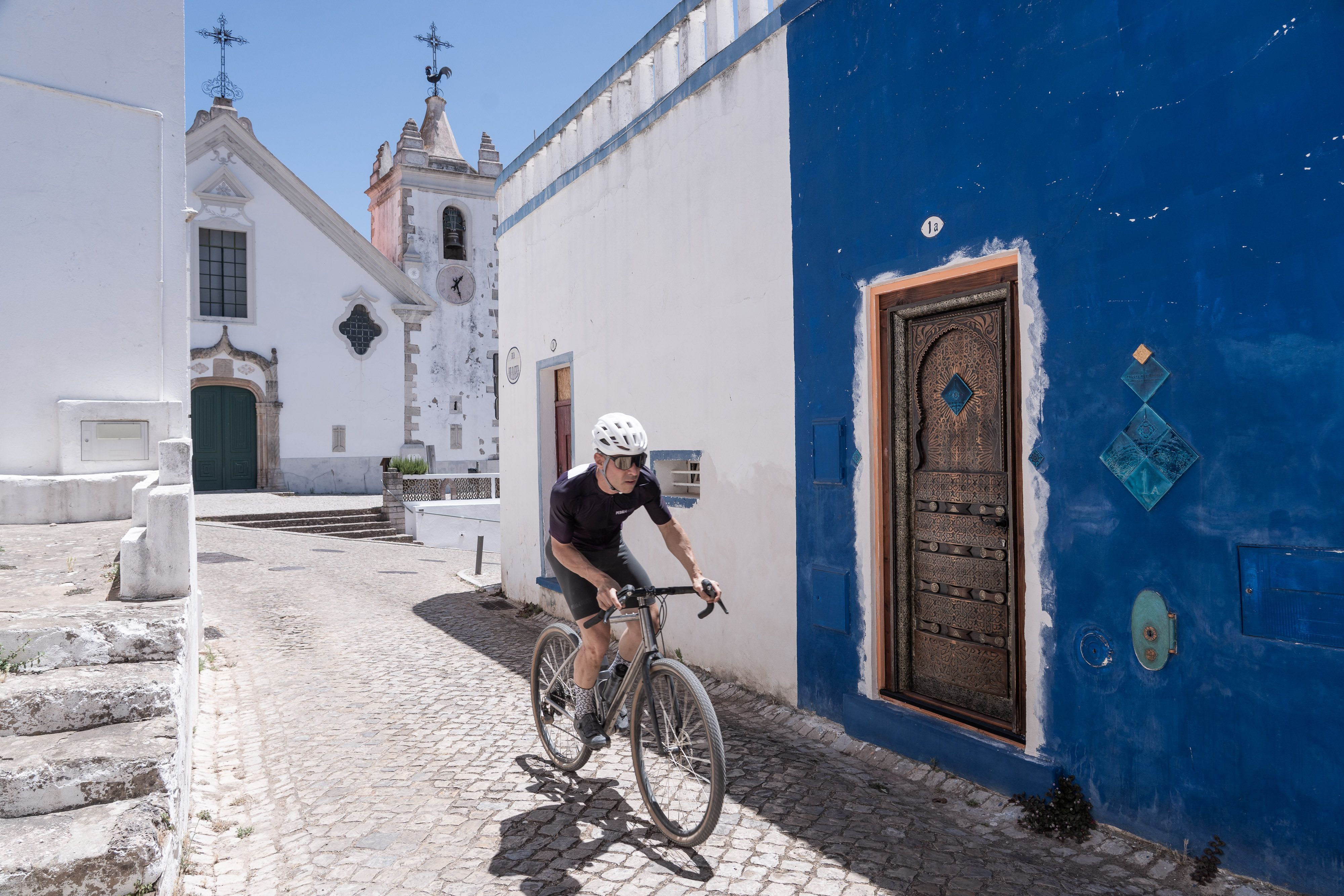
Cyprus is one of Europe's hidden gems for gravel, and Aurora's route proves it. The five-day itinerary begins with a prologue threading through the cobbled streets of Tochni and Lefkara, two of the island's most characterful villages. What follows is a progression through some of the most diverse terrain you will find on any Mediterranean island.
The route in detail
The Tróodos Mountains form the backbone of the Aurora Cyprus experience. Stages wind beneath the summit of Mount Olympus through forests of black pine on ochre earth, with panoramic views down into surrounding valleys. Stone villages with traditional cafés punctuate the climbs, giving the ride an unmistakable flavour of the Eastern Mediterranean.
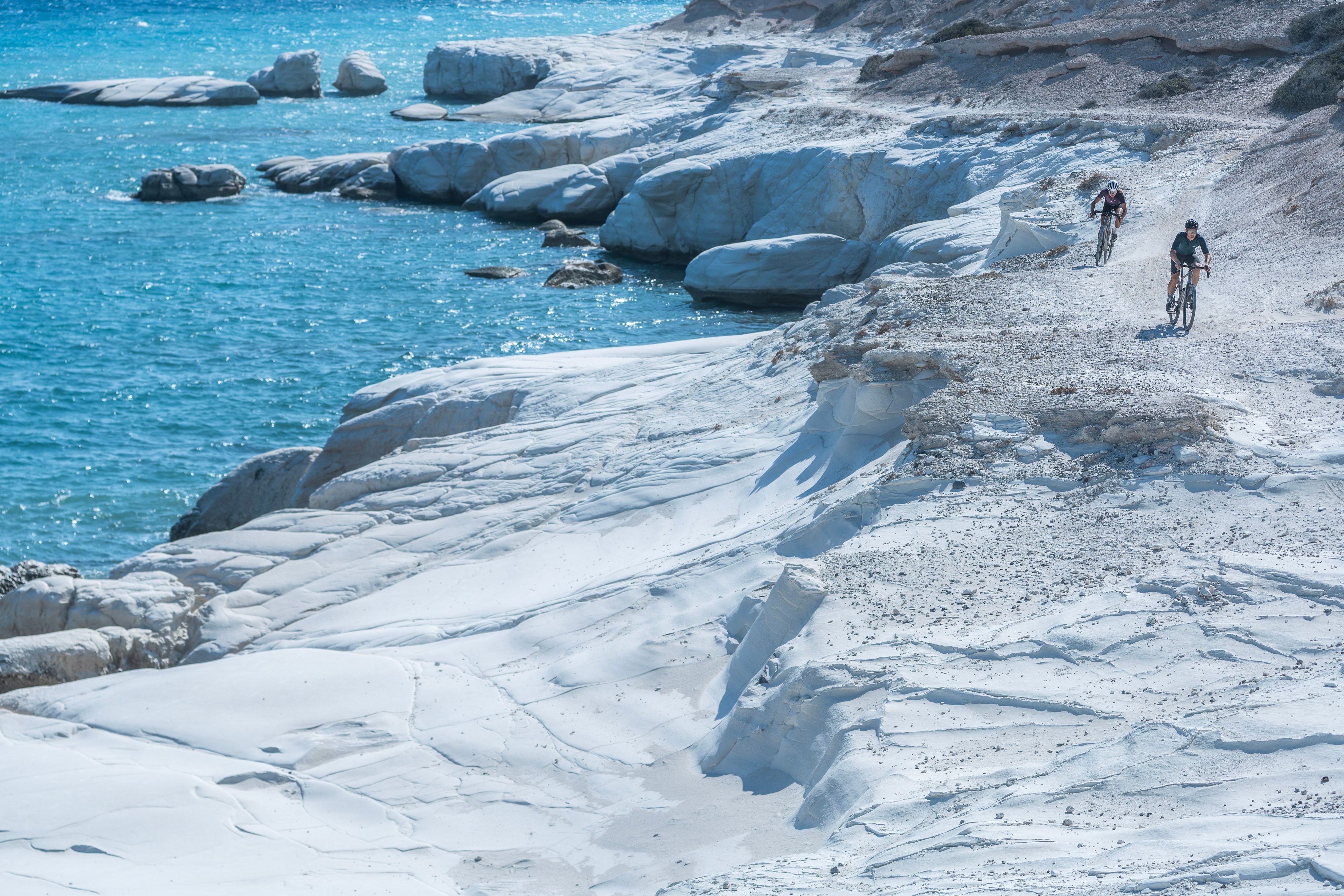
From the mountains, the route descends to the plain of Polis, rolling through fields of olive, almond, and vine. The final days push northwest toward the coast, reaching the Baths of Aphrodite and then the wild Akamas peninsula, where gravel tracks run above water that shifts from turquoise to deep blue.
The event is all-inclusive: hotels, full board, and logistics between stage start points are all handled by the organisation.
Note: As of June 2026, the Aurora Gravel Cyprus 2027 edition has not yet been confirmed due to the ongoing situation in the wider Middle East region. Check the Aurora Cyprus page for the latest updates.
Aurora Gravel Switzerland
Date | 5–6 September 2026 |
|---|---|
Location | Ferme de Pierre à Bot, Neuchâtel, Switzerland |
Distance | Full 179 km / Discovery 133 km |
Elevation | Full 3,637 m / Discovery 2,958 m |
Format | 2 days (2 stages) |
Participants | Maximum 300 |
Entry | From €219 |
Registration | Open now |
The Switzerland edition is Aurora at its most accessible. A two-day weekend format keeps the logistical commitment light while still delivering everything that makes the series special: rally timing, distinctive terrain, and a social atmosphere that the organisers take seriously as a core part of the experience.
The route in detail
Both stages depart from the heights of Neuchâtel, a medieval city perched above its lake. The region, known as Jura 3 Lacs, sits at the meeting point of the Swiss Midlands and the Jura mountain range. Altitudes range from 450 m near the lake to 1,350 m on the Jura crests, which means real climbing and real descending, not just rolling countryside.
Stage one tends toward the fast and flowing, with gravel tracks through open farmland and gentle ridgelines. Stage two pushes higher into the Jura, where the terrain becomes more demanding and the views more expansive.
Two format options, Full and Discovery, allow riders to self-select their challenge level. The event is also open to gravel e-bikes (outside the main classification) and flat-bar mountain bikes, which reflects a genuinely inclusive approach to gravel culture.
The saturday evening festival
One of the most distinctive elements of the Switzerland edition is the Saturday evening festival at the Ferme de Pierre à Bot. Live music, local beer, food trucks, and an expo village run from 17:00 to 23:00 and are open to the public, meaning you can bring friends and family who are not racing. This is Aurora at its most community-focused.
Aurora Gravel Portugal
Date | 12–16 October 2026 |
|---|---|
Location | Portimão Algarve Race Resort, Portugal |
Distance | 415.9 km total |
Elevation | 6,556 m of climbing |
Format | 5 days (prologue + 4 stages) |
Participants | Maximum 200 |
Entry | All-inclusive from €2,099 |
Registration | Open now |
If you had to pick one Aurora event for a first experience of the series, Portugal in October would be a very strong argument. The Algarve in autumn is warm without being brutal, uncrowded, visually stunning, and filled with the kind of back-road gravel that most of northern Europe can only dream about.
The route in detail
The prologue takes place on the Rally-Car circuit at the Portimão Algarve Race Resort, giving riders four laps of a purpose-built motorsport track before the proper adventure begins. It is an unusual but genuinely fun start to a week.
The four main stages all depart from and return to the same central base at the Race Resort, which simplifies logistics considerably. The stages are designed to contrast with each other.
Stage 1 eases riders in gently, with no major difficulties. Stage 2 is the Queen Stage at approximately 145 km, crossing to the eastern Algarve and passing through the picturesque village of Alte, where the Café Gernamo de Bici Arte waits at mid-route. Stage 3 climbs into the Serra de Monchique, the highest point in the Algarve, through eucalyptus forests with panoramic views over the coast. Stage 4 heads to the ocean, on coastal tracks that feel purpose-built for a gravel bike.
The all-inclusive package covers four and five-star hotels and full board throughout.
Aurora Gravel Rally series: at a glance
Event | Date | Duration | Distance | Elevation | Base Price | Spots |
|---|---|---|---|---|---|---|
Cyprus | TBC 2027 | 5 days | 400 km | 7,450 m+ | €2,099 | 200 |
Switzerland | 5–6 Sept 2026 | 2 days | 179 km (full) | 3,637 m+ | €219 | 300 |
Portugal | 12–16 Oct 2026 | 5 days | 415.9 km | 6,556 m+ | €2,099 | 200 |
Other essential european Gravel Races
Beyond Aurora, the European gravel calendar has several events that have built genuine reputations over multiple editions.
Badlands (Spain)
An ultra-distance event crossing Andalusia and the Bardenas Reales desert. Riders navigate 730 km and 18,000 m of climbing entirely self-supported. Badlands is at the extreme end of the spectrum in terms of difficulty, but it has defined much of the aesthetic that European gravel culture aspires to: sparse landscapes, nights under stars, and an experience that cannot be faked.
Gravel Epic (Portugal)
Based in the Alentejo and Algarve, Gravel Epic is a multi-day stage race with a strong international field and a focus on the sun-baked cork oak forests and schist-dirt tracks of southern Portugal. An established event that helped put Portugal on the European gravel map.
Gravel Saint-Maurice (Switzerland)
A one-day Swiss event in the canton of Valais, threading through Alpine terrain with views of the Rhône valley. Compact, well-organised, and beloved by the Swiss domestic gravel community.
Tuscany Trail (Italy)
Not strictly a race in the traditional sense, the Tuscany Trail is a 600 km bikepacking route from the Apennines to the Tyrrhenian Sea that has grown into one of the most celebrated gravel experiences in Europe. Riders move at their own pace but share a tracker map, creating a distributed community experience across the duration.
Gravel Up (Italy and France)
A series of one-day gravel events scattered across the Italian and French Alps and their foothills. Less well known internationally but highly regarded among riders who prefer smaller fields and less commercial atmospheres.
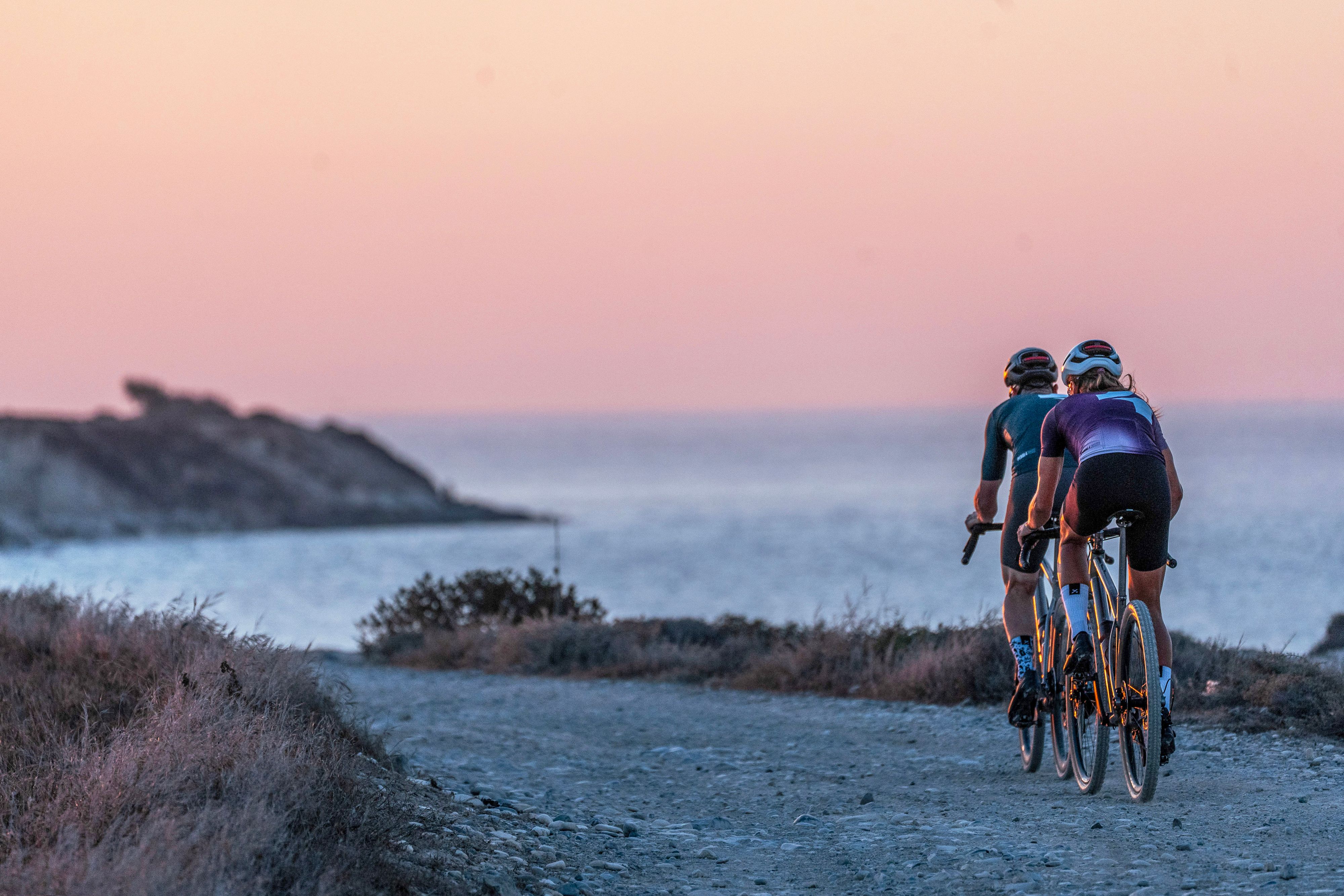
Quick comparison: top European Gravel Events 2026
Race | Country | Format | Distance | Level | Vibe |
|---|---|---|---|---|---|
Aurora Switzerland | Switzerland | Stage race, 2 days | 133–179 km | Intermediate | Festival + racing |
Aurora Portugal | Portugal | Stage race, 5 days | 415 km | All-round | Adventure, all-inclusive |
Aurora Cyprus | Cyprus | Stage race, 5 days | 400 km | All-round | Exploration, all-inclusive |
Badlands | Spain | Ultra-distance | 730 km | Expert | Extreme self-sufficiency |
Gravel Epic | Portugal | Stage race | Varies | Intermediate-Expert | Competitive |
Tuscany Trail | Italy | Bikepacking | 600 km | Intermediate-Expert | Adventurous, solo |
How to travel to a Gravel Race in Europe
Getting yourself to the start line of a European gravel race is one part of the challenge. Getting your bike there in one piece is another conversation entirely.
Most European gravel races are accessible by a combination of flights and regional trains or buses. The key logistical question is always the bike.
Flying with a bike means either paying airline bike fees (which vary enormously between carriers and can run from €30 to well over €150 each way), or booking a dedicated bike transport service.
Train travel in Europe has improved significantly for cyclists. Many high-speed trains in France, Belgium, and Switzerland now have dedicated bike reservations, and the Eurostar carries boxed bikes in the luggage hold. Italy's Trenitalia and Spain's Renfe have specific bike policies that are worth checking before you travel.
Regional transfer services exist for the biggest events, allowing riders to drop their bikes at a central collection point and have them transported to the event location.
Your bike transport solution: the Bikeflip Box
If you are travelling to any European gravel race by air, the question of how to protect your bike during transit is non-negotiable. A serious crash or impact to a poorly packaged bike can write off carbon fibre components worth thousands of euros, and no airline compensation scheme will cover that.
Bikeflip is the official bike transport partner of Aurora Gravel Rally Series and offers the Bikeflip Box, a bike shipping solution designed specifically for cyclists travelling to races and events across Europe. Whether you are flying into Faro for Aurora Portugal, landing in Geneva for the Swiss edition, or routing through to Larnaca for Cyprus, the Bikeflip Box provides reliable, race-ready protection for your bike at every stage of the journey.
The partnership between Bikeflip and Aurora Gravel is a natural fit: both are built around the idea that the logistics of getting to a race should be handled so that riders can focus entirely on the experience of riding.
Frequently asked questions about European Gravel Races
What level of fitness do you need for a multi-stage gravel race?
It depends enormously on the event. Aurora Switzerland's Discovery option at 133 km over two days is accessible to any fit recreational cyclist with some gravel experience. The five-day editions in Portugal and Cyprus at around 400 km with significant elevation are more demanding and require specific preparation, but they are not elite events. Most participants are enthusiastic amateurs who have trained consistently for several months.
Is gravel-specific equipment required?
For most events, yes. Tyres with a volume of at least 40 mm are strongly recommended for the terrain used by Aurora and similar events. A navigation device capable of displaying GPX files is typically mandatory (or at least heavily advised) for self-navigation on liaison sections.
What does "all-inclusive" mean for Aurora's five-day events?
The Aurora all-inclusive packages for Cyprus and Portugal cover accommodation in hotels, full board (all meals), and logistical transfers between stage start points where applicable. You arrive, ride, eat, sleep, and ride again. It is a model borrowed from cycling holiday operators and applied intelligently to a race format.
Can I participate if I am not a competitive rider?
Absolutely. Aurora's rally timing format means that only selected sections of each day are timed. You can ride the liaison sections at a touring pace, stop for coffee, and still participate meaningfully in the race. The classification rewards those who push hard on the timed sectors, but the experience is designed to be enjoyable for riders across a wide performance range.
How do I get my bike to a European gravel race?
The most reliable solution is a dedicated bike transport service. For Aurora events, Bikeflip offers the Bikeflip Box, a purpose-built shipping solution for travelling cyclists. This takes the stress out of airline bike fees and ensures your bike arrives ready to ride.
Final Word
The European gravel scene in 2026 is in excellent shape. The combination of well-established classics and genuinely innovative new series like Aurora Gravel Rally Series means there has never been a better moment to plan your first or fiftieth gravel race on the continent.
If you are looking for a multi-day adventure that combines serious riding with destination travel and real conviviality, Aurora's approach is hard to beat. Their Portugal edition this October and the Switzerland weekend in September both have registration open right now.
Check the full race details at aurora-gravel.com, sort your bike transport with Bikeflip, and get yourself to the start line.
Don't have the right gravel bike yet? Find yours on Bikeflip
This article was produced by the Bikeflip team. Bikeflip is the official bike transport partner of Aurora Gravel Rally Series and provides the Bikeflip Box for riders travelling to gravel events across Europe.