Bicycles that made history
From a 1938 wooden bicycle to 3D printing: Paolo Carosini’s collection spans almost a century of innovation and design.

That's why we went to meet Paolo Carosini, a BMX flatland enthusiast and collector, to discover a collection built over years of research and passion.
His collection numbers around 200 bicycles, and some of the ones we saw tell almost a century of design, innovation and cycling culture.
A bike printed by a robot
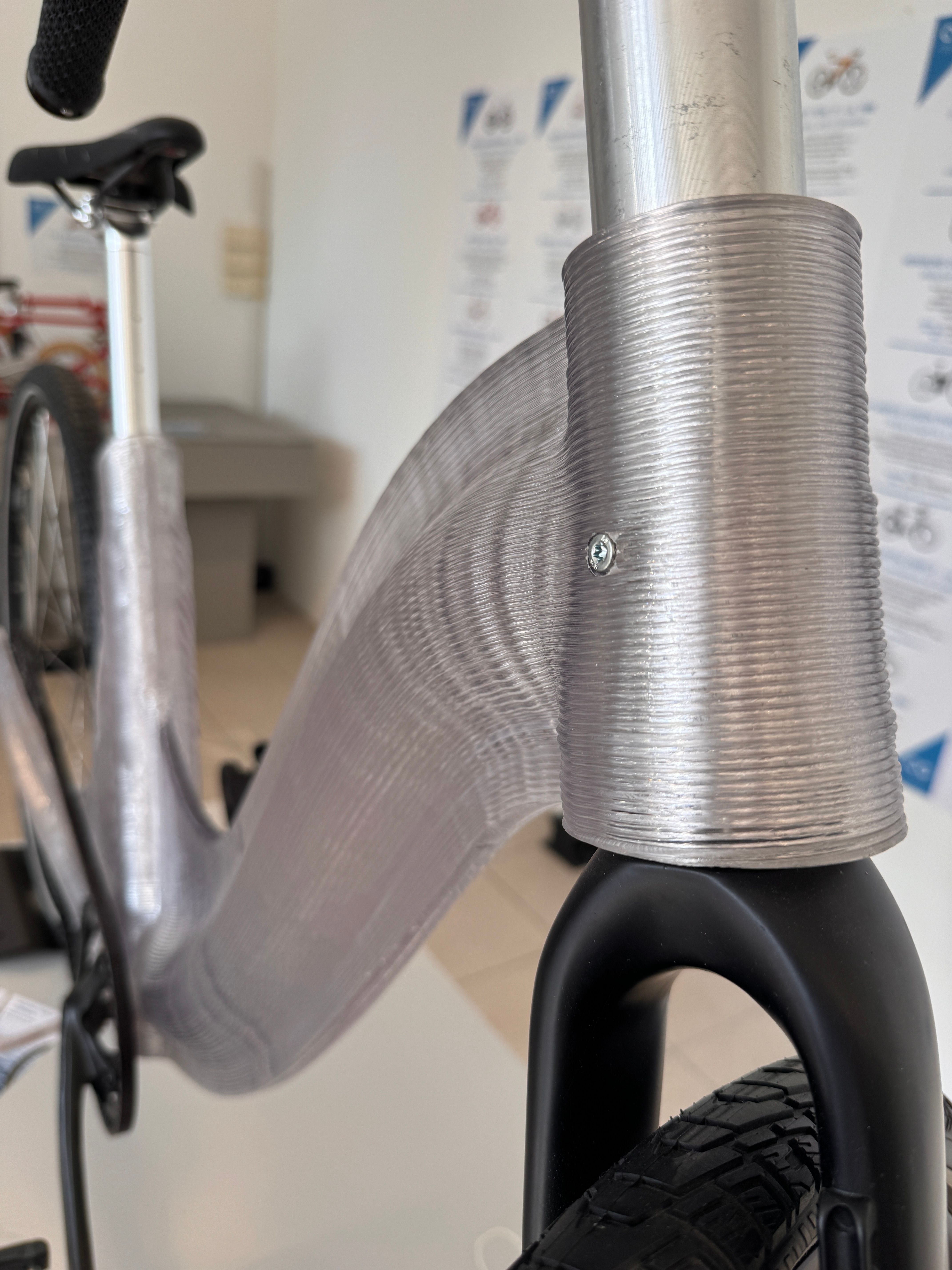
The first one seems to come from the future. The frame is made using a robotic 3D printing technology based on computational design. It doesn't start from a traditional drawing, but from data and algorithms sent to a robot fitted with an extruder.
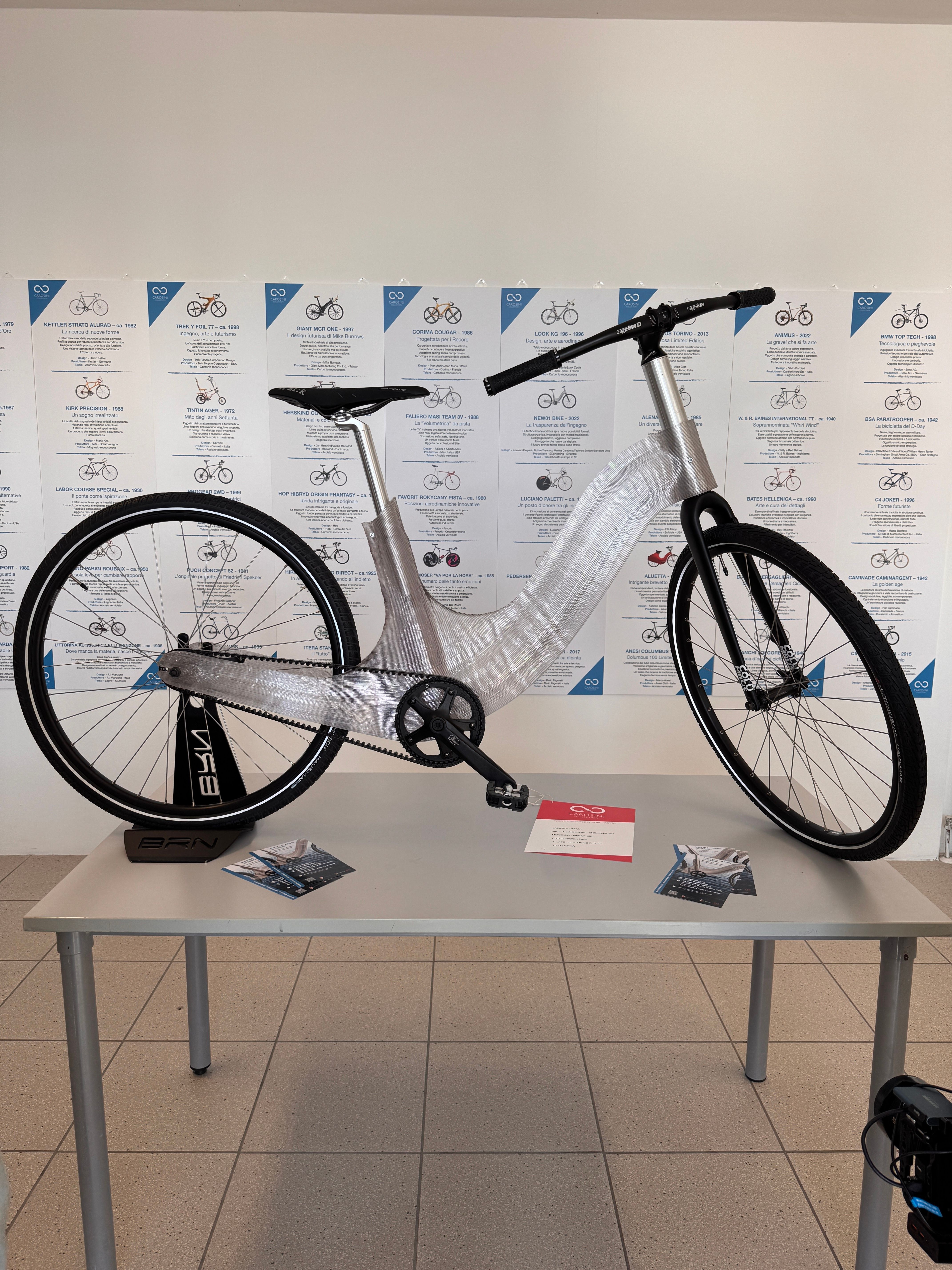
The material is deposited exactly where it's needed, increasing the thickness at the points that require greater mechanical strength. Once the extrusion is finished, the frame is also milled to refine the surface.
According to Paolo, the idea behind the project was to achieve a truly customisable bicycle: take the customer's measurements and produce the frame in about three and a half to four hours.
T&C Pocket Bici: when a bicycle has to fit inside an oval
At the opposite extreme is one of the most curious bikes in the collection.
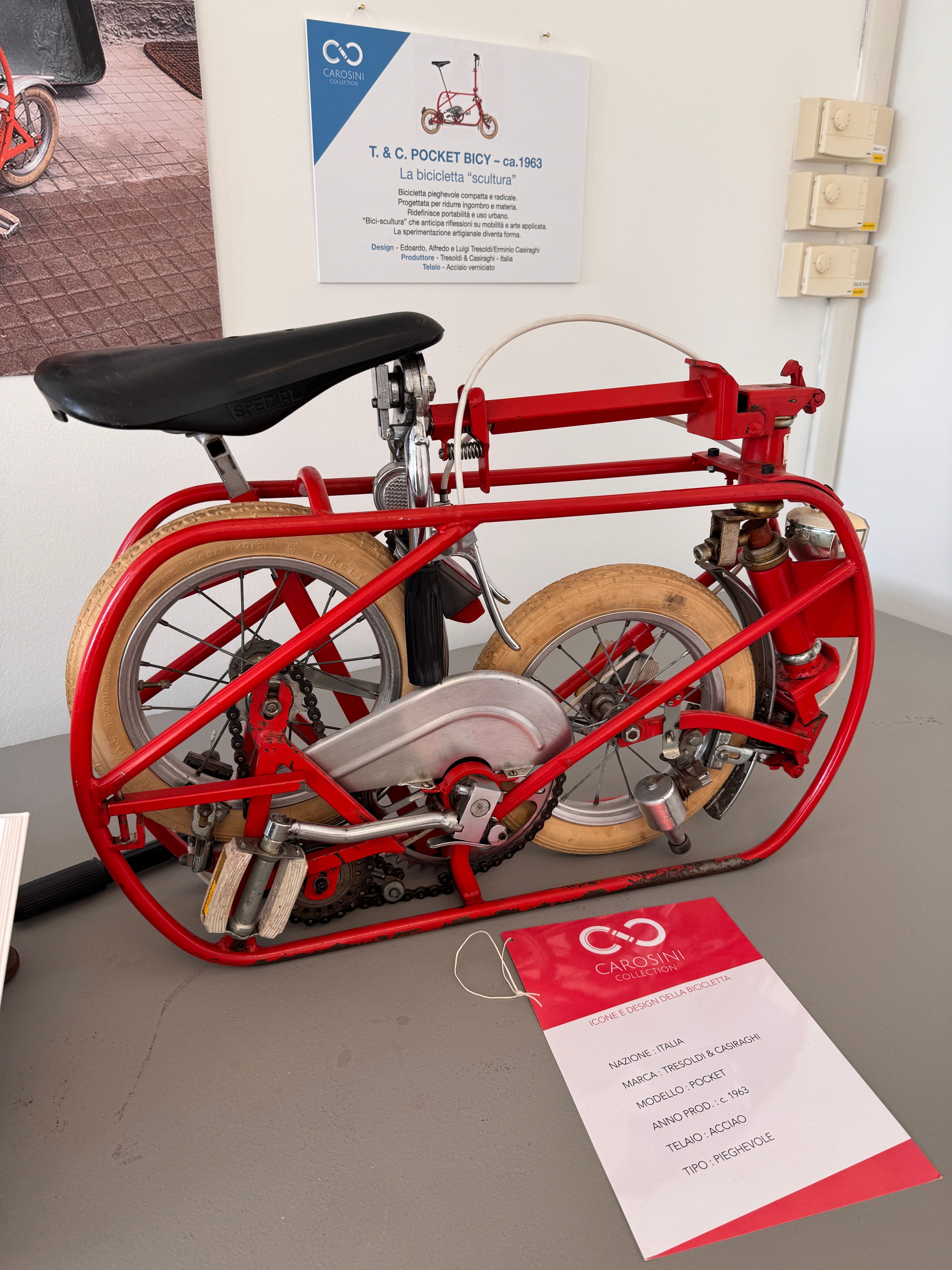
The T&C Pocket Bici was born in the late 1950s and was then produced in the early 1960s by Tressoldi & Casiraghi of Bergamo. The goal was to create an extremely compact bicycle, with 12-inch wheels fully enclosed within the frame. The project came from an order for 2,000 bicycles destined for a Chinese group.
The technical solution is still fascinating today: folding pedals, a steering system with a cardan joint, a double crown and components enclosed inside a structure that looks almost like the mechanism of a watch.
The commercial story, however, ended badly. Paolo says a first batch of around 1,000 bicycles was produced, but payment never arrived and the project came to a halt.
Kirk Precision: a magnesium bike that came from Hawaii
In the 1980s the pursuit of lightness led some designers to experiment with decidedly unusual materials. The Kirk Precision is a perfect example.
The frame was made of magnesium, a very light material but one that is difficult to work with, sensitive to corrosion and, above all, highly flammable.
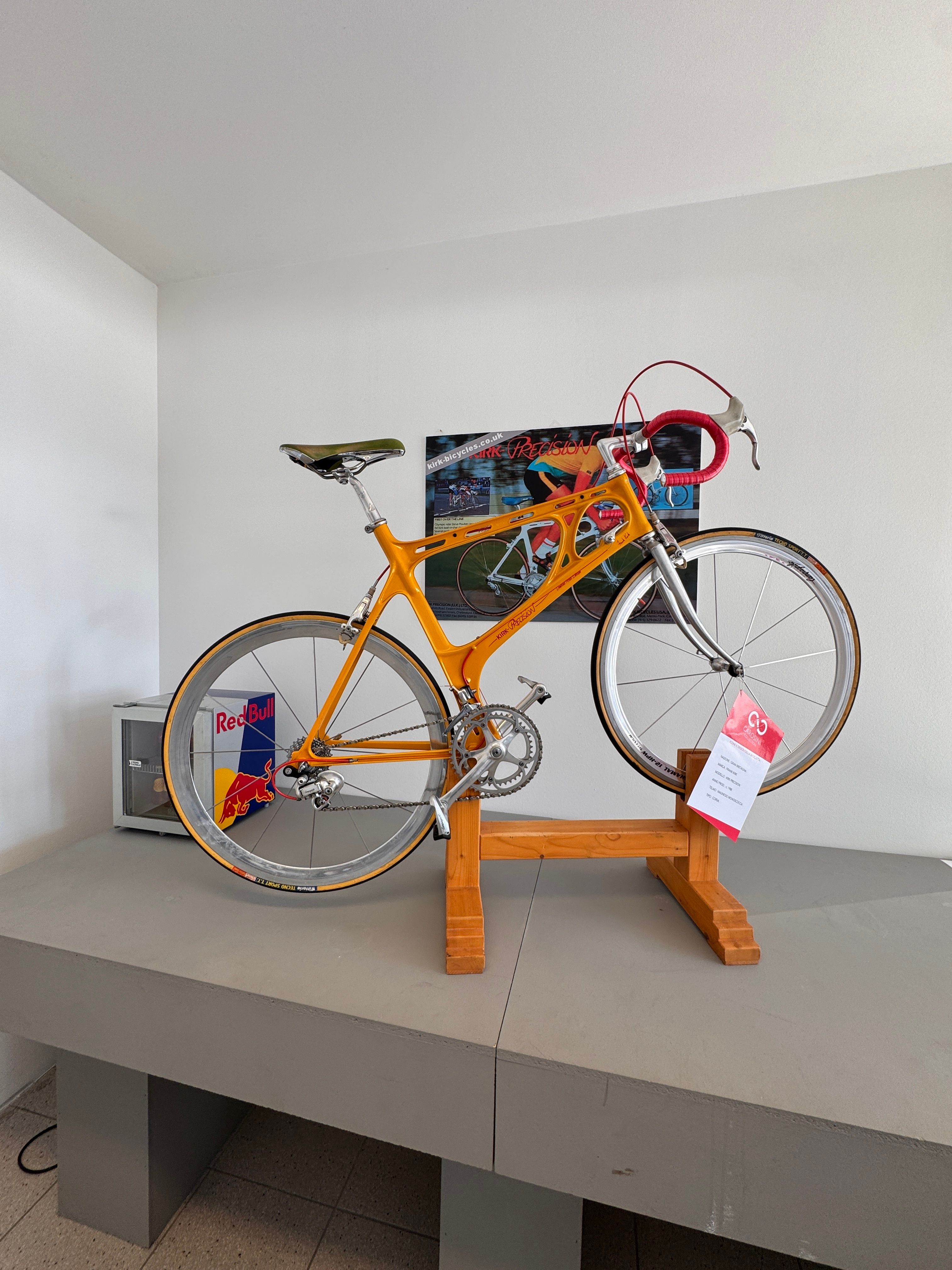
During production, Paolo says, some sparks even caused the plant to explode. The project stopped after a few hundred units, between finished bikes and semi-finished parts. The one in the collection has a story within the story. It had been used in triathlon racing in Hawaii and was later abandoned. Paolo recovered it right there and fully restored it, working on the damage caused by the salty environment.
A bicycle almost entirely in wood, from 1938
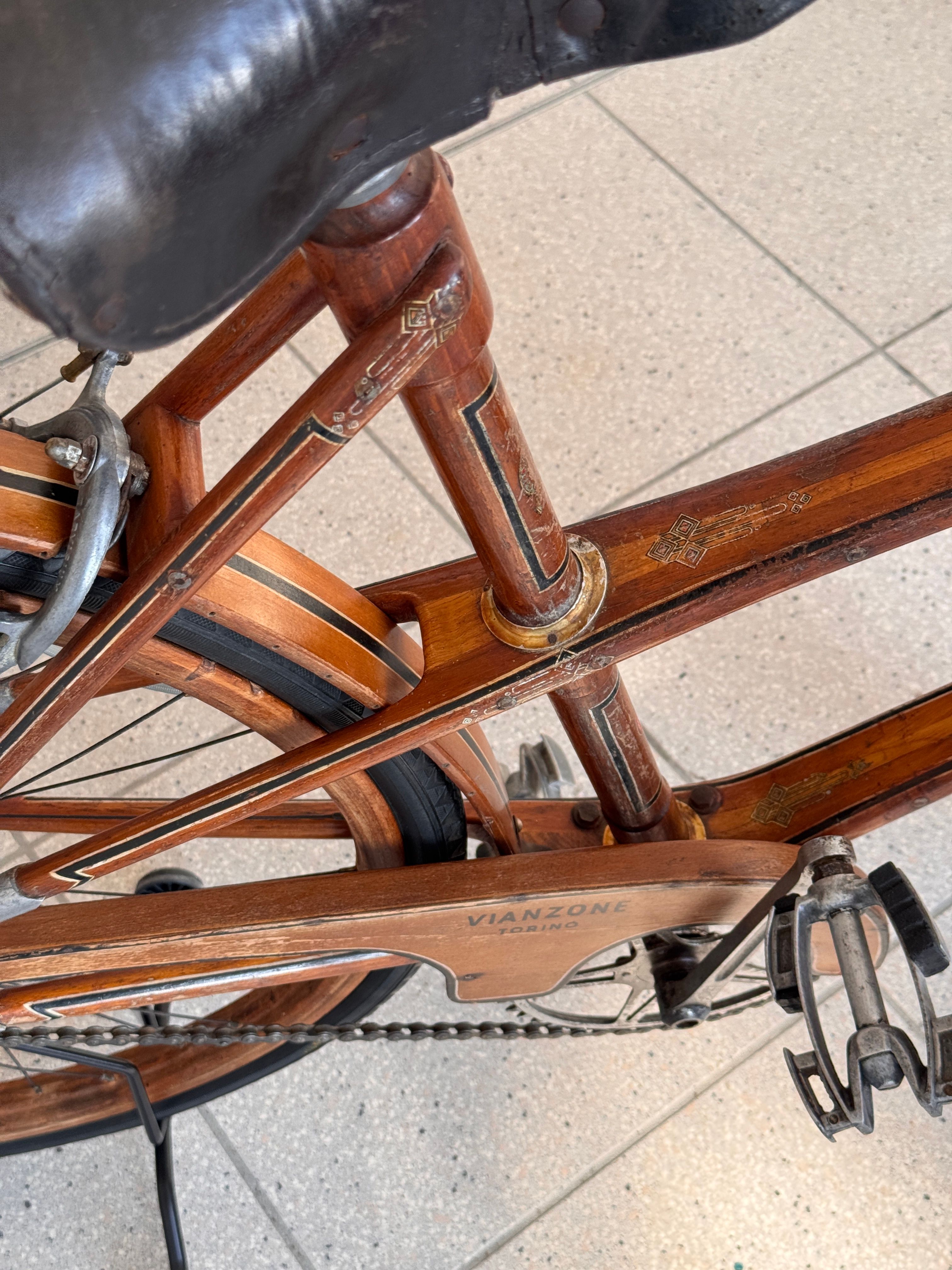
One of the most surprising pieces in the collection dates back to 1938. It's a bicycle made by the Vianzone brothers of Turin, who were already experts in woodworking for rims, skis and other applications.
The solution they adopted was to combine wood and aluminium. The result is a bicycle in which even the handlebars, seat post, rims and chain guard are made of wood. According to Paolo, around 300 units were produced.
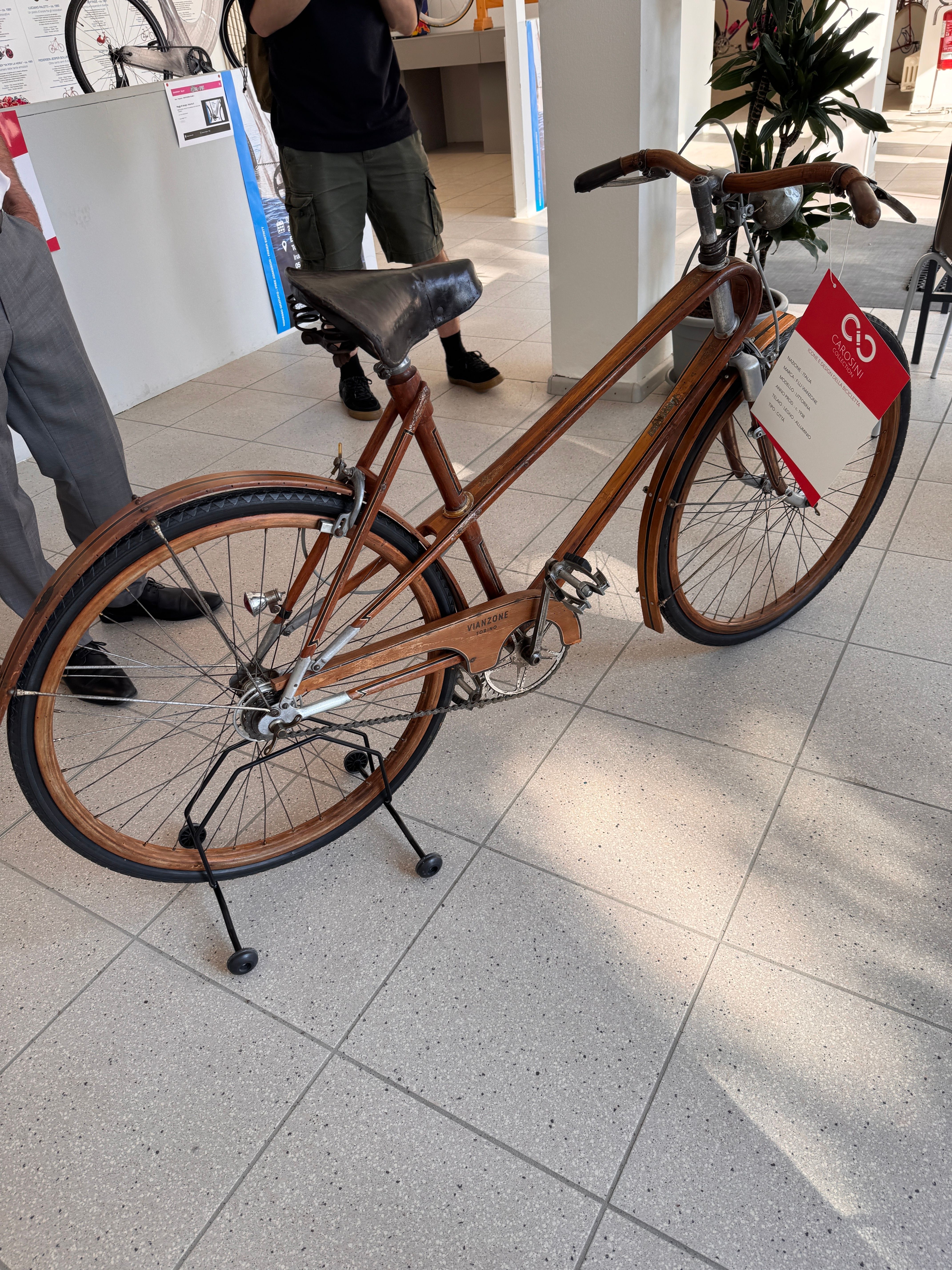
What makes it even more fascinating isn't just its rarity, but its state of preservation. Almost ninety years after it was built, many of its original details are still perfectly legible. And this is exactly where one of the collection's recurring themes emerges: value doesn't depend only on the material or the rarity, but also on the story that object can still tell.
From 1938 wood to contemporary wood and carbon
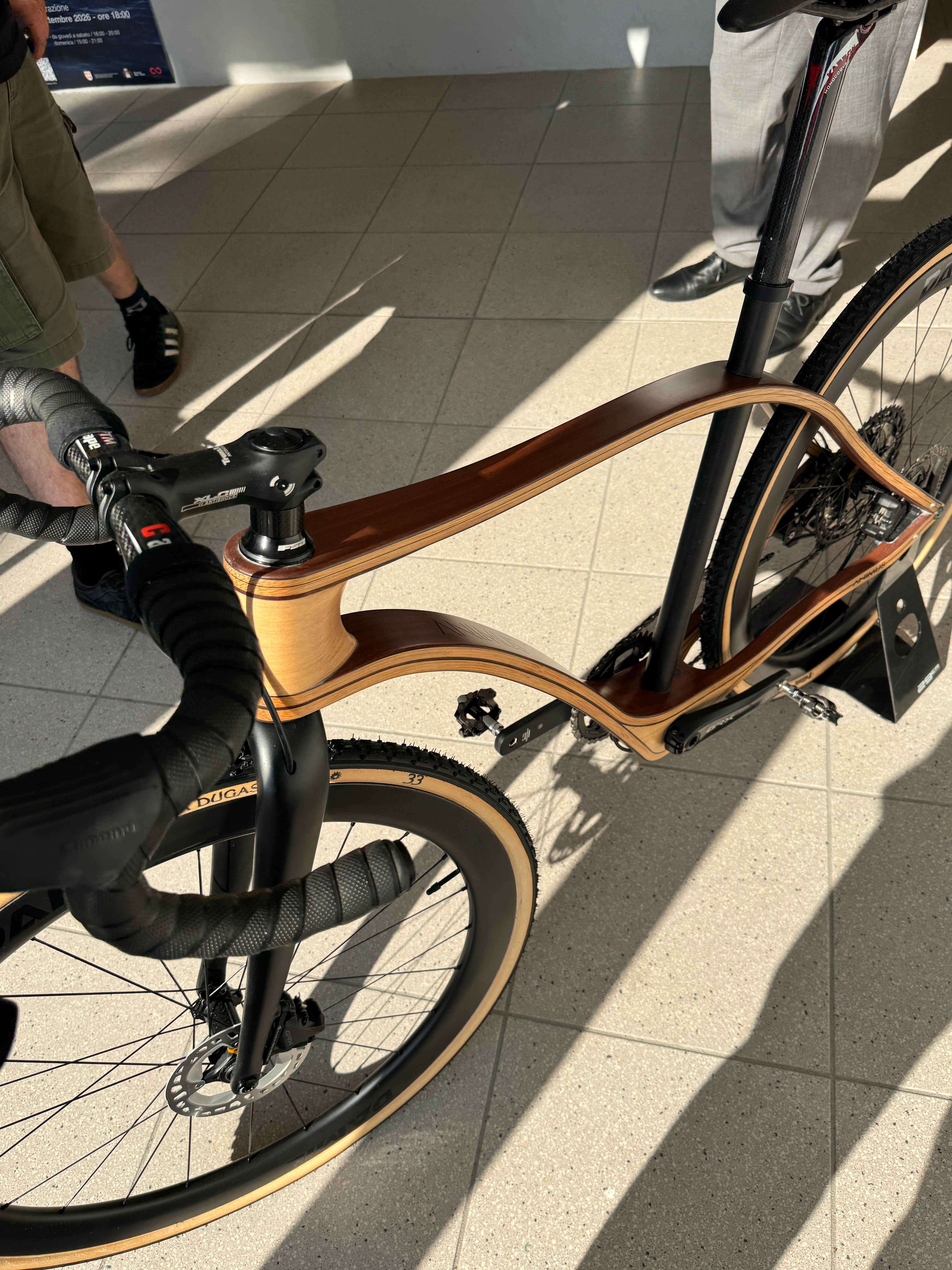
Paolo chose to pair the Vianzone with a much more recent bicycle. The connection is immediate: once again, the protagonist is wood. In this case, however, the frame is built from a layered structure combining wood and carbon. The mahogany visible on the outside is mainly aesthetic, while the different materials work together inside the structure.
The company that made it came from the world of nautical furnishings and boat building. The shape of the frame, Paolo says, was actually inspired by the bow used by the son of one of the owners. The project also caught the attention of Armani, who ordered around thirty bicycles to use in its showrooms. Two bicycles separated by decades, then, but united by the same material and by two completely different ways of interpreting it.
Colnago, Eros Poli and the pursuit of the record
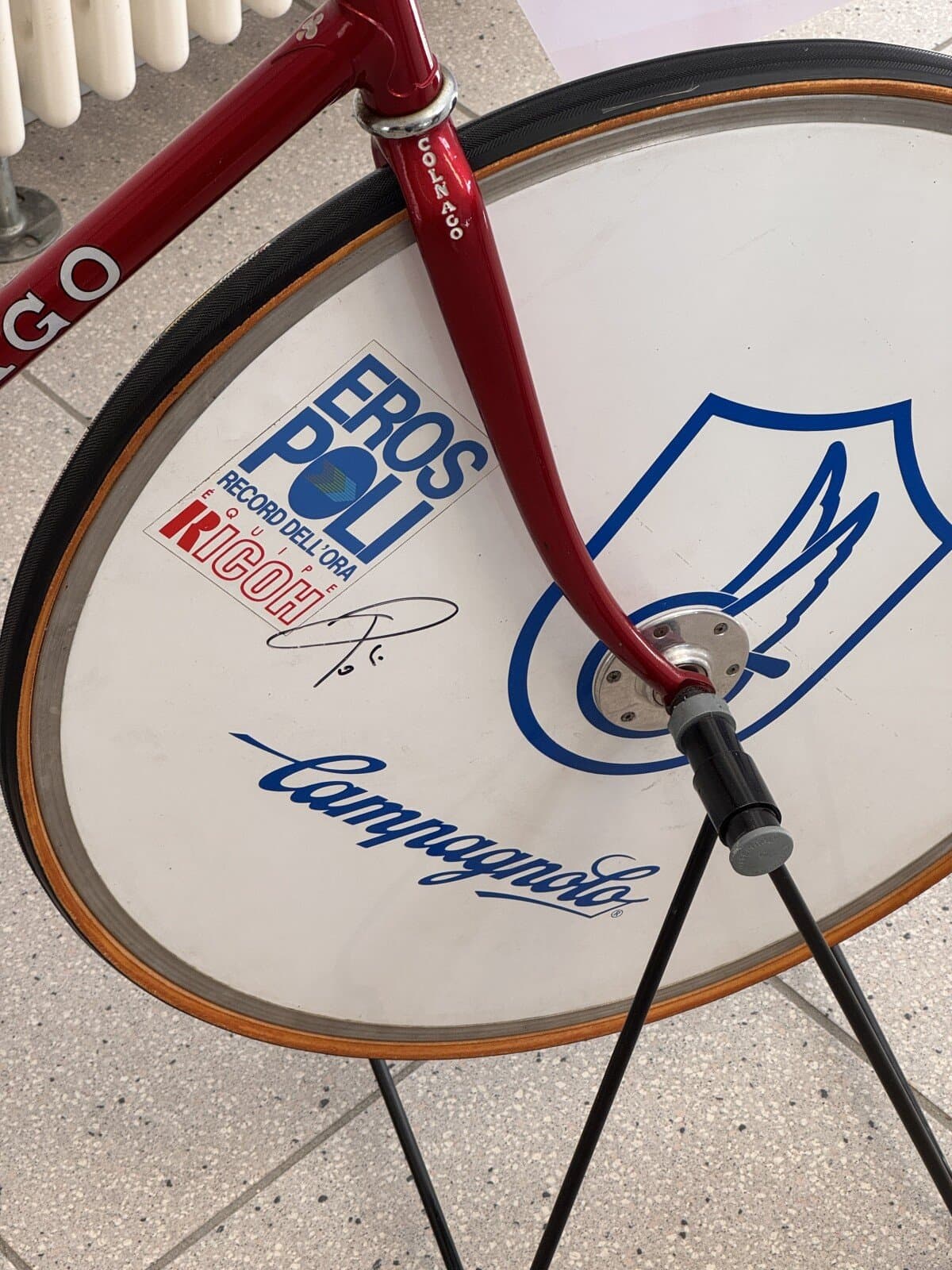
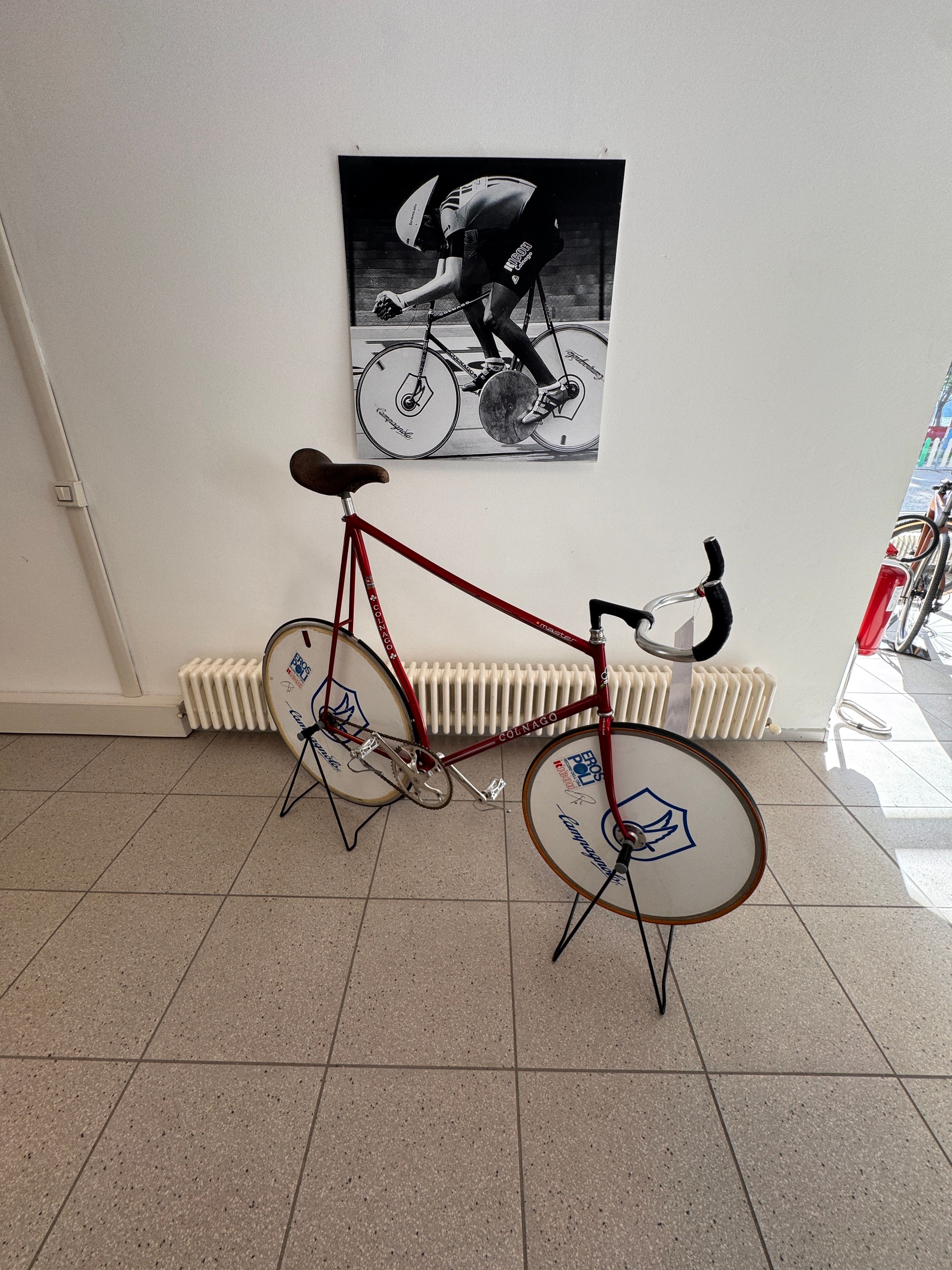
Experimentation doesn't just concern materials and shapes. In competitive cycling, every detail can become a field of research. In 1986 Colnago built several frames for Eros Poli, derived from the famous Master, modified to reduce weight and adapt to the demands of the track and time-trial attempts.
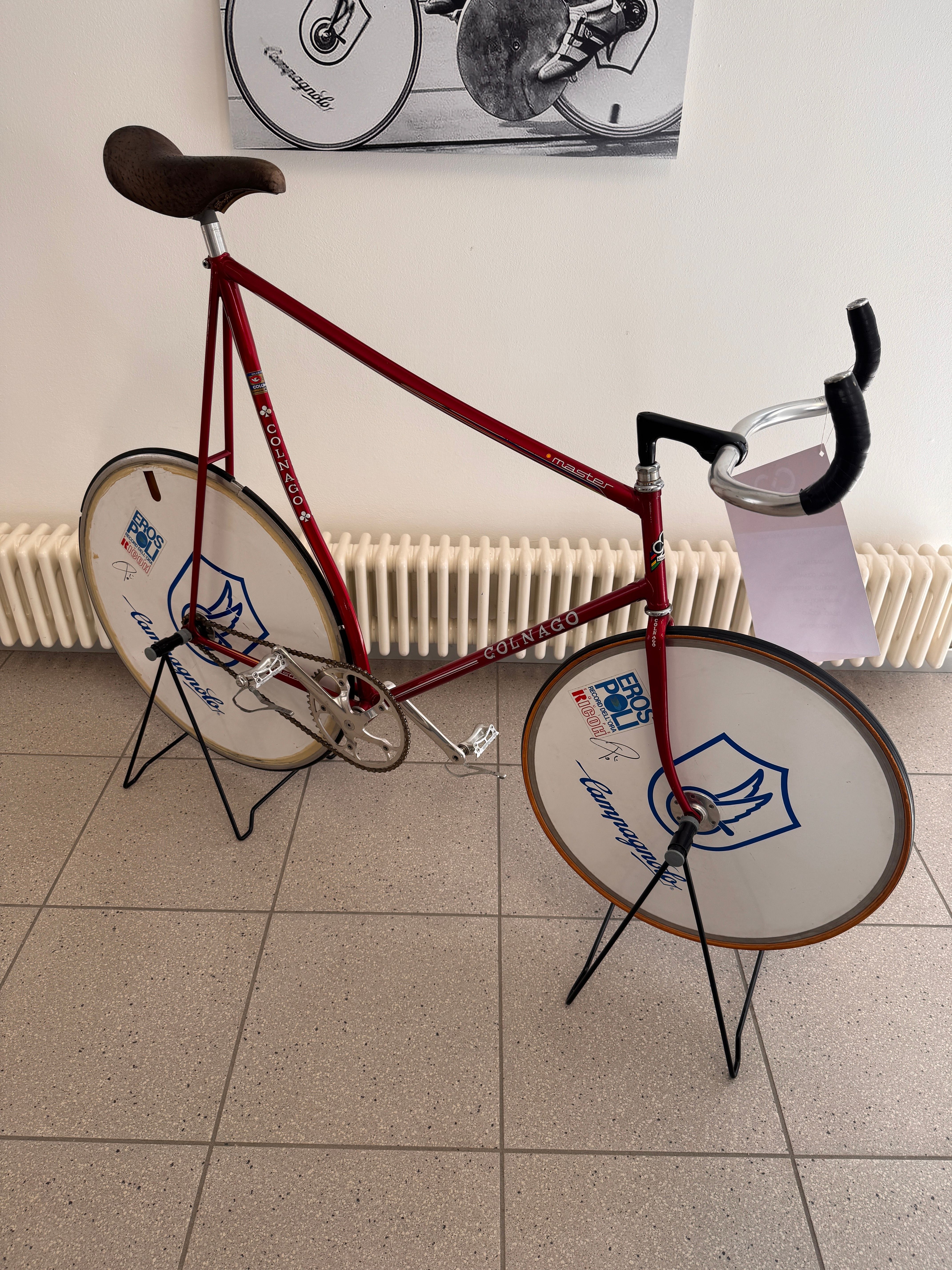
The frame's tube sections were reduced, and Campagnolo also built specific components. Paolo also points to the wheels fitted on the bike as one of the earliest examples of development aimed at fluid dynamics and aerodynamics. Looking at it today, with its large disc wheels and slim frame, it almost looks like an experimental machine. And in a way, that's exactly what it was.
A bike for sharing, before sharing even existed
Another piece in the collection looks much more recent than it actually is. In the 1980s, designers Fabrizio Cairoli and Carla Maltesi worked on a bicycle project intended for urban bike-sharing in Milan.
The shapes were designed to be instantly recognisable. The large surfaces could carry sponsor branding and messaging, while the basket was built directly into the handlebars. The one kept in the collection is a prototype. The final project was meant to be made in aluminium, but production never really reached the intended scale.
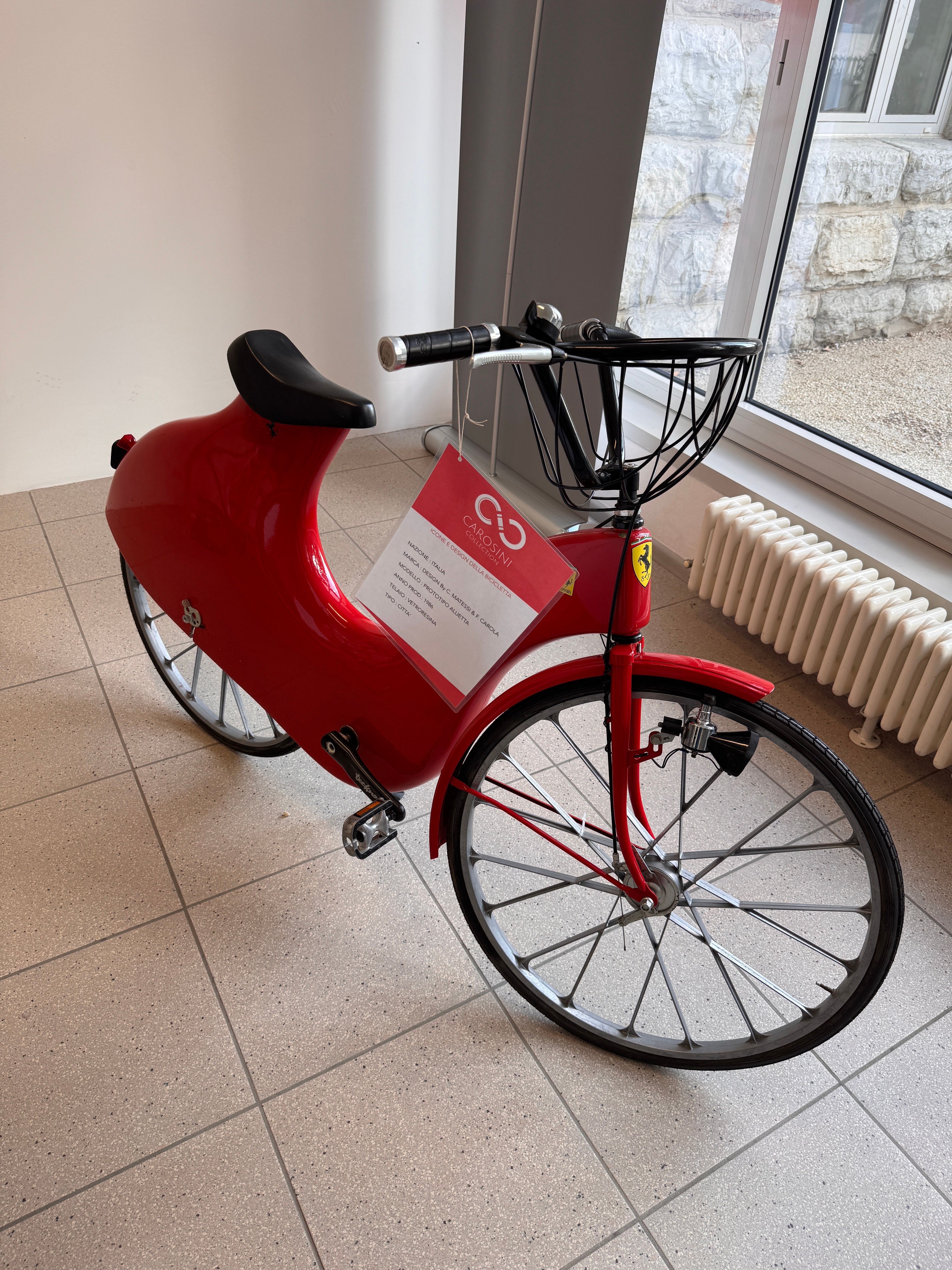
Today it's interesting for one main reason: it shows how some ideas we consider contemporary actually have much older roots.
Masi 3V: one of the few units built for the Soviet team
Among the racing bikes, a Masi 3V also stands out. Faliero Masi was one of the great names of Italian artisan frame building, with his workshop beneath the Vigorelli velodrome in Milan, a symbolic place for track cycling.
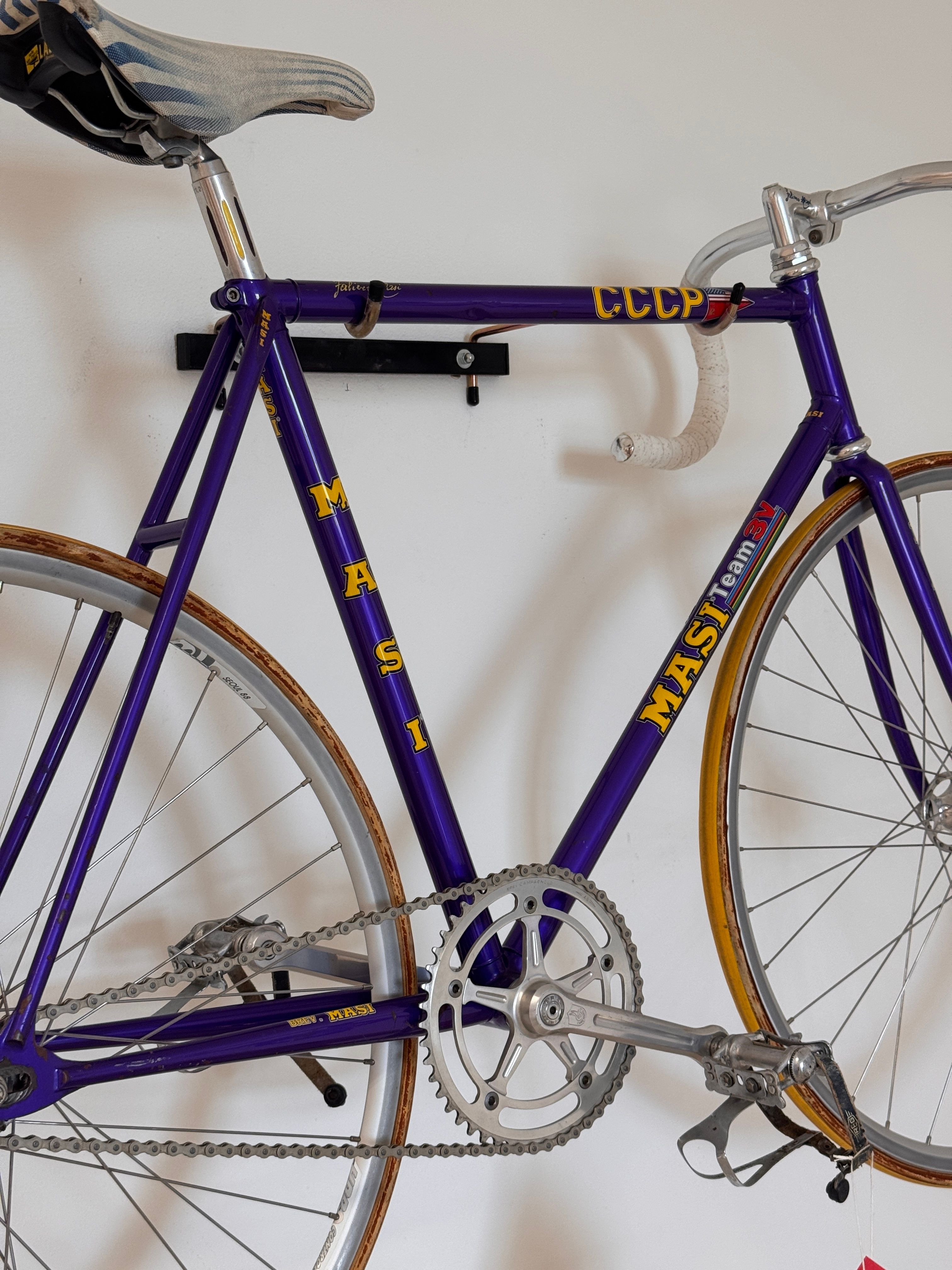
Paolo says this particular unit was built for the Soviet team and that only a handful were ever produced, around seven or eight. The name 3V refers to the distinctive volumetric joints used in the frame, an example of how the great frame builders could turn technique into something close to artistic craftsmanship.
Cinelli Giotto: when design meets the first structural calculations
Perhaps one of the bikes that best represents the border between design and engineering is the Cinelli Giotto. Paolo explains that the project came from a collaboration between Cinelli, engineers linked to Ferrari and the Politecnico di Milano.
Those were the years when mathematical systems started being used to study force distribution and the structural behaviour of materials.
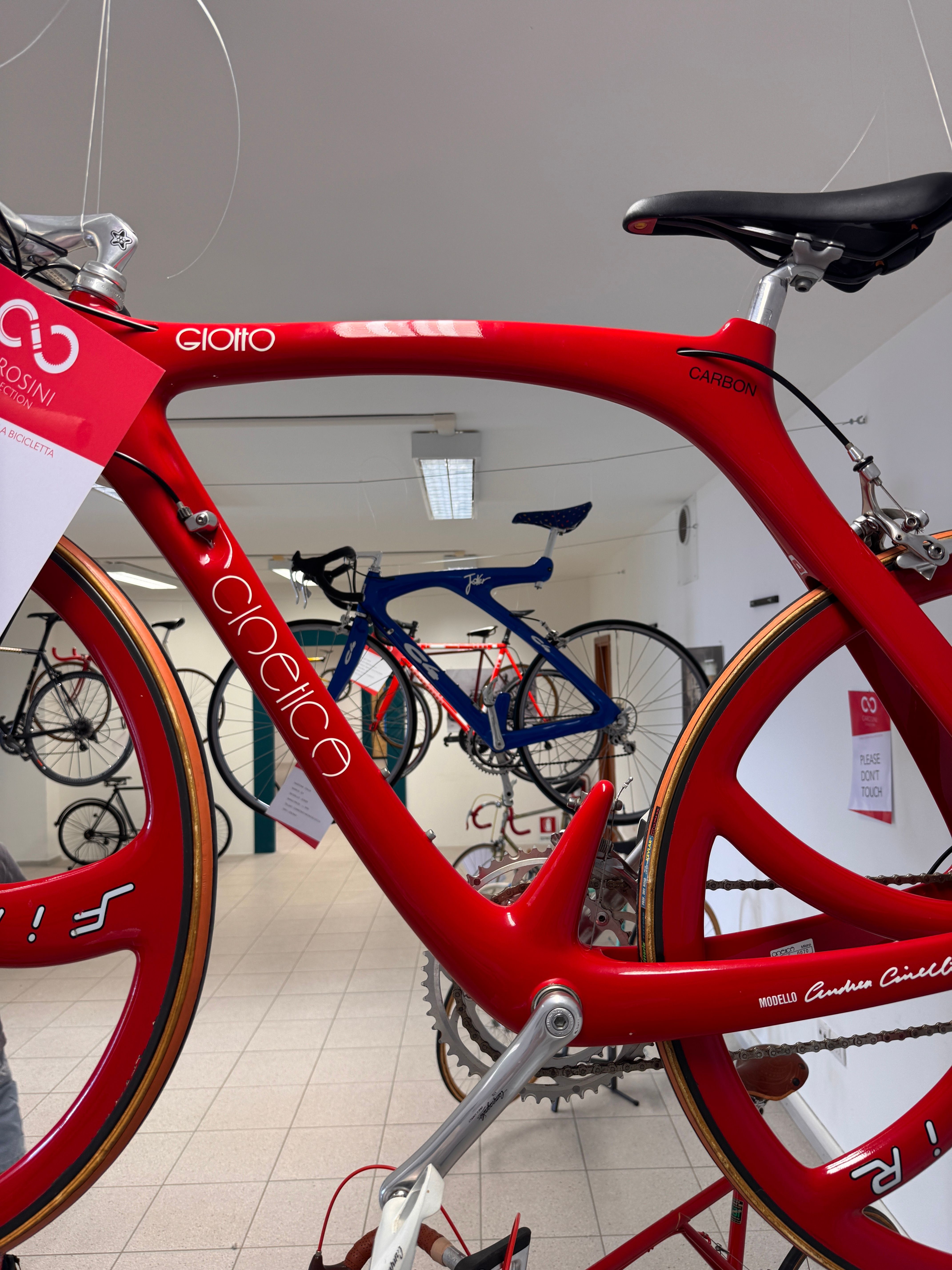
The result was a bicycle with radical shapes, of which around twenty units were made. Seen today, it still looks experimental. And that's probably one of the most fascinating aspects of the entire collection.
Collecting bicycles means collecting ideas
Visiting Paolo Carosini's collection, you quickly get the sense that the common thread isn't rarity.
It's research.
Reading books, visiting exhibitions, tracing the history of a model, tracking down a surviving unit, finding whoever designed it or whoever still holds information about it.
Paolo himself explains that behind these objects lies an ongoing work of documentation and research. And that's probably what makes the collection so interesting.
Bicycles change. Materials change. Technologies, competitions and even the way we move around cities all change. But the same question keeps coming back: how can we reinvent the bicycle once again?
At Bikeflip, every day, thousands of bicycles continue their journey from one owner to the next. Because sometimes the best way to give a bike a future is simply to put it back on the road.
Discover the bicycles available on Bikeflip