Mountain biking in winter: training, gear and bike setup
Cold, mud and early darkness are no reason to stop. Bike, tyres, clothing and riding tips for winter MTB, with advice from Bikeflip riders.

In short
In a hurry and don't feel like reading it all? Keep a bike you don't mind sacrificing to the mud, let a little air out of your tyres, dress in layers and start out slightly cold, and when you get home, wash it with a bucket and sponge. Everything else is below.
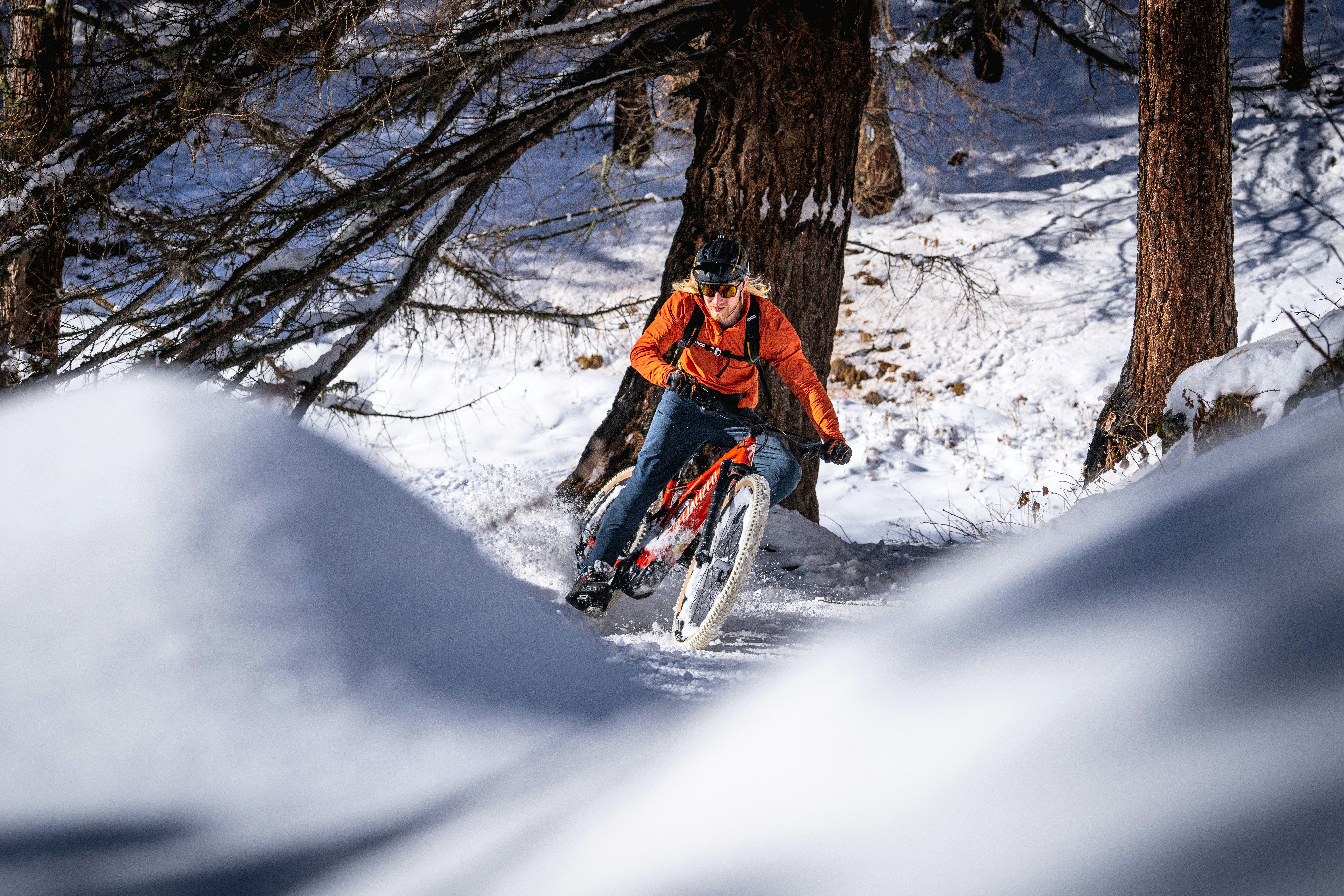
In November lots of riders “park” their bike in the garage until the following year. Many others know and love winter for its empty, quiet trails without a speck of dust. Sure, it's cold and dark by five. But with a few tricks, riding from November to March is something you'll actually look forward to.
Does mountain biking in winter make sense?
Want to keep training no matter what, and the cold doesn't scare you? Then this section is for you.
Almost always, yes. Winter mountain biking makes sense because the state of the ground matters more than the thermometer. Frost, for example, is on your side: the ground hardens and grip is often better than you'd expect. Packed snow rides well too (with the right tyres). The real problem is the thaw: by midday the trail turns to slush and you risk damaging it. With deep fresh snow or sheet ice, though, you're better off staying home unless you have a fat bike or studded tyres.
There's also an advantage that often gets overlooked. On slippery ground you learn to brake earlier, pick your line and stay loose on the bike. When you're back on dry trails in spring, you notice it straight away, and you'll be glad you trained on slick terrain.
The winter beater: why it pays to buy your winter bike used
Riding inevitably wears out components like suspension, bearings and drivetrain, and tough conditions such as mud, water and grime make it worse. To keep their main bike in good shape for as long as possible, many riders give it a service, store it in the garage until summer and switch to a second bike for the winter months: a “winter beater”. That way the main bike racks up fewer kilometres and wears out less.
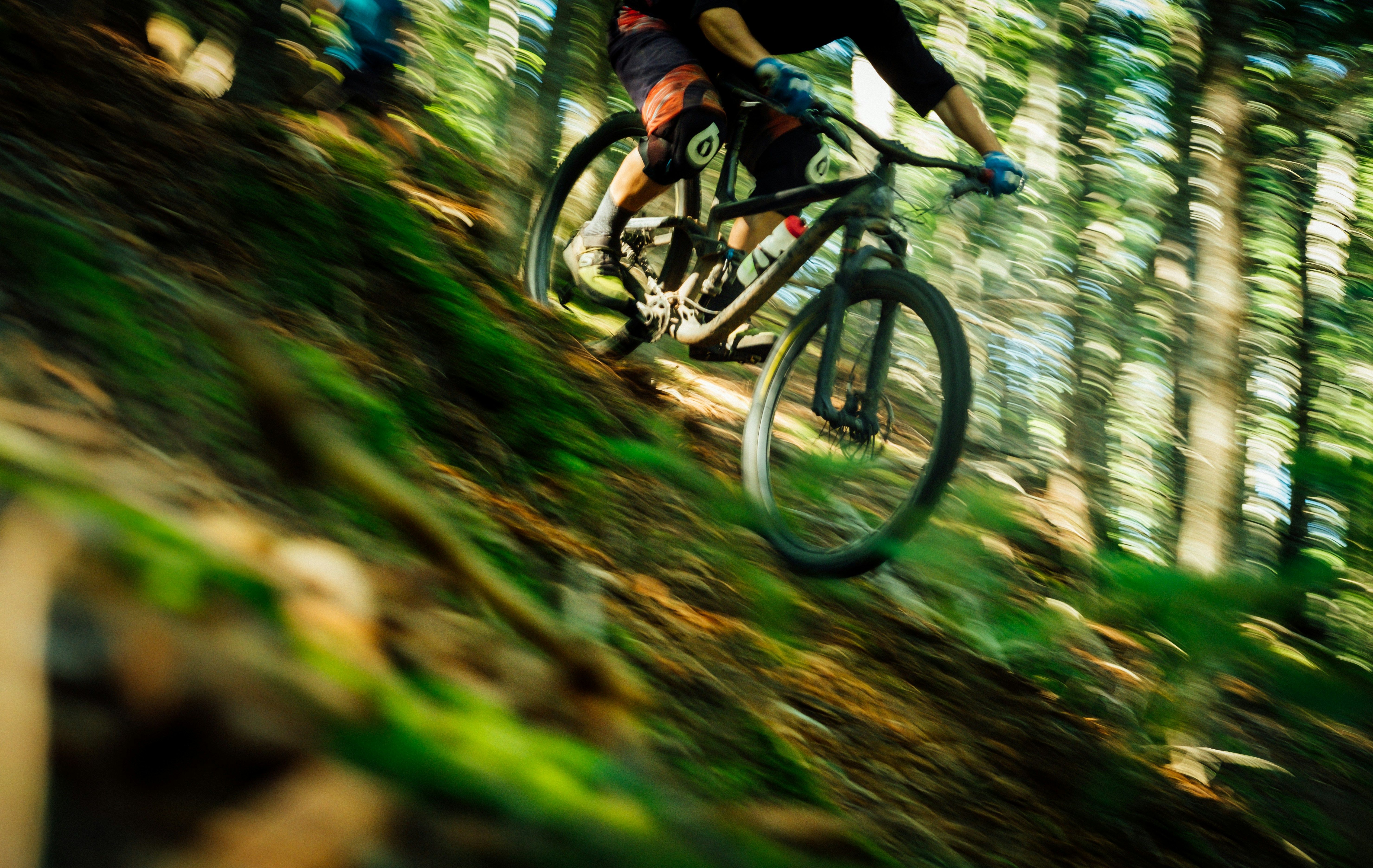
In our view, the perfect winter beater is a hardtail with a few years on it. It has fewer parts that can break, it's quick to fix and it runs the same components as a full suspension bike. It pays to buy one used: you spend a fraction of the price and every splash of mud worries you a lot less. Its only real limit is that you feel the hits more on very rough sections, because there's no rear shock. But that's also the fun of it: a hardtail demands a more active riding style and more body work, and that improves your technique when you get back on your full suspension.
Three hardtails to look for second-hand
The Canyon Grand Canyon is the classic all-rounder, tough and easy to keep in shape. Check out all Canyon Grand Canyon bikes on Bikeflip →
The Trek X-Caliber is a simple, no-frills aluminium hardtail, a pure winter beater. Browse all Trek X-Caliber bikes on Bikeflip →
If you want something livelier, the Specialized Chisel is also aluminium but sportier. Discover all Specialized Chisel bikes on Bikeflip →
If you'd rather play it safe, look at refurbished bikes. On Bikeflip they go through a 25-point checklist by our partner mechanics, cost up to 70% less than new and come with at least one year of warranty. Browse all mountain bikes →
How to get your MTB ready for winter
In winter, almost your whole setup comes down to one question: how do I stay stuck to the ground?
Tyres and pressure
Start with pressure. Let out a bit of air compared with summer: the tyre sits better on the ground and grips more. Don't overdo it, though, or you risk a pinch flat on the first rock.
To give you an idea: on 2.4" tubeless tyres and at around 75 kg, many riders run about 1.5-1.7 bar up front and 1.7-1.9 bar at the rear in summer. In winter you can drop 0.1-0.2 bar and see how it feels. On snow, with very wide tyres, you can go as low as 0.8-1.2 bar. These are rough guidelines: they depend on your weight, your tyre and the terrain, so lower it a little at a time.
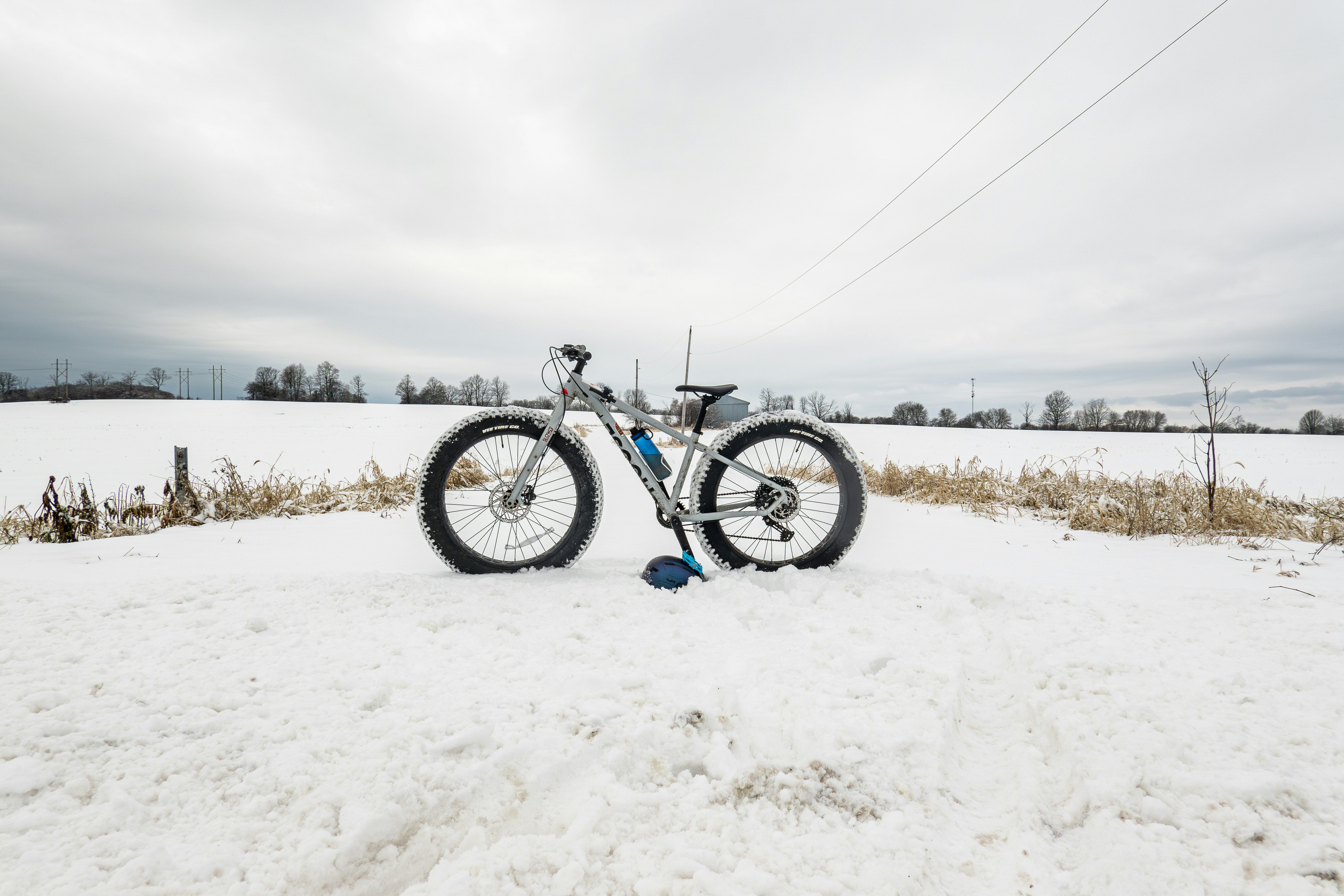
Next, the tread. If you can, fit a tyre with tall, widely spaced knobs that shed mud instead of turning into a slick. On snow there's a slightly counter-intuitive rule: on soft snow a wide tyre floats, while on packed snow a narrower one cuts through the top layer and finds the hard ground underneath. Studded tyres are magic on ice, less so on bare rock and tarmac.
The rest of the bike
If you don't feel confident on slippery ground, try flat pedals: you can put a foot down instantly and control the bike better. If your suspension feels a bit different from usual, that's normal: cold can affect how it behaves, but a quick adjustment is all it takes. A front mudguard costs a few euros and saves you from eating mud on every descent.
Always charge your lights, even if you're sure you'll be back before sunset: in January it gets dark sooner than you think. If you ride an e-MTB, keep the battery indoors and fit it at the last minute, because range drops in the cold.
What to wear for winter mountain biking
Missing something, from a helmet to gloves? On Bikeflip you'll also find clothing and components, new and used, with the same buyer protection as our bikes.
Browse clothing → · Browse components →
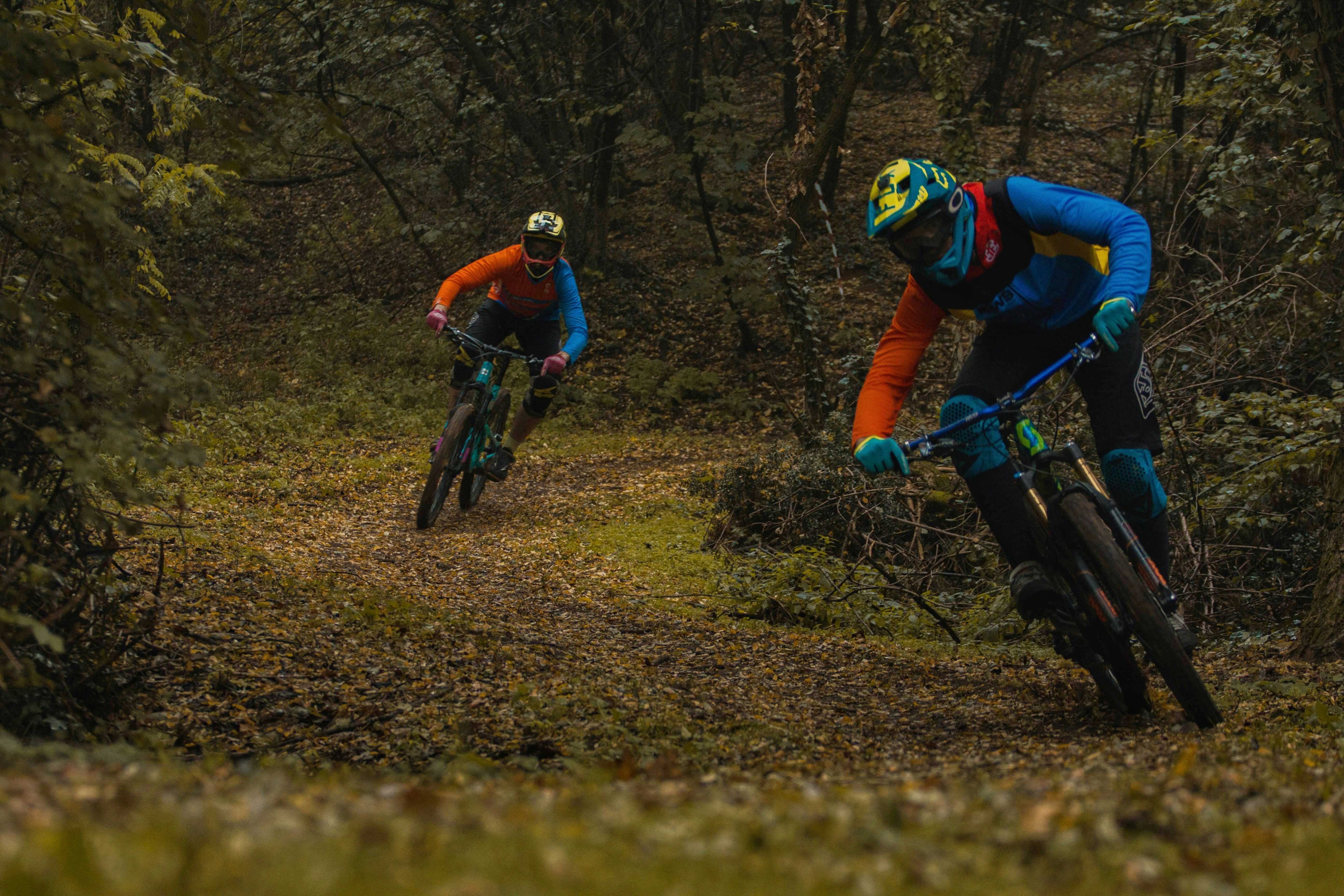
The advice everyone will give you, and almost everyone ignores the first time: start out a little cold. If you feel comfortable in the car park, ten minutes into the climb you'll be soaked, and on the descent that sweat turns ice-cold.
Layers
Three thin layers work better than one heavy garment. Next to the skin, a long-sleeve thermal base layer, ideally merino. On top, a softshell or a windproof jersey. In your pack, a waterproof jacket that folds up small, to pull out at the top before you drop in.
For your legs, winter bib tights with a chamois are fine for XC. For trail and enduro, many riders prefer long waterproof trousers, which stand up better to mud and crashes.
Hands, feet and head
These are the first parts to freeze, because in the cold your body sends blood to your vital organs. You need winter gloves, merino socks and winter shoes, or overshoes if you don't ride often. Add a skull cap and a neck warmer, and pack a spare one, because the one you climbed in will be wringing wet.
Glasses with clear lenses or goggles protect you from mud and branches. Knee pads, as well as saving you in a crash, keep your joints warm.
One last thing: leave dry clothes, a towel and a thermos of tea in the car. After a winter ride, changing straight away is worth more than any supplement.
How to ride on mud, snow and ice
In winter the same trail can change three times in a day. At nine it's hard and frozen, at midday the sun thaws it, and by four it starts to freeze again.
On ground like this, brake before slippery sections, not on them, stay loose and active on the bike and look far ahead. When the snow changes colour or a patch turns shiny, pay closer attention to your grip. In mud, on the other hand, speed is your friend: the momentum you carry from the descent gets you through where pedalling would leave you stuck.
Respect the trail
If your tyres are digging deep ruts, turn around, switch to another trail, or ride it to the bottom and don't do it a second time (nobody ever turns back). A trail gets damaged more during the thaw than at any other time, and the people who built it need months to fix it. The same goes for closures: if there's a sign, there's a reason.
Always have a plan B
In winter, the mountain often decides for you. Steve Ude knows this well: he has been an Italian Cycling Federation MTB guide since 2011, is a Bikeflip ambassador and works mostly in the Paganella area. Turning back, in short, is part of the game. Check the weather where you're going to ride, because the forecast at home means little, and tell someone about the ride you have in mind.
Trails closed? Work on your technique
Some days it's better to leave the trail alone. That doesn't mean spending them on the sofa. Technique, for example, can be trained perfectly well outside your front door. A good exercise to start with is the track stand, balancing on the bike without moving, which then saves you on tight switchbacks. In the Bikeflip School, Andrea Ziliani, MTB YouTuber and Bikeflip ambassador, explains it step by step.
For Red Bull Italy he also shot a video with his 10 tips for riding in winter (in Italian). Beyond that, a bit of gym work for legs and core, which you'll definitely feel on the descents, and the turbo trainer for days when it's pouring outside.
After the ride: cleaning and maintenance
Mud and salt left on the bike overnight can lead to corrosion and component wear. Ten minutes as soon as you get home is all it takes.
Warm water, a sponge and a brush. You don't need a pressure washer, which can force water into bearings and seals. Then dry the drivetrain, pivots and seatpost thoroughly and apply a “wet” lube to the chain, which lasts longer in damp conditions. While you're at it, check your brake pads: mud wears them down fast, and finding out in the garage is much better than halfway down a descent.
Good to know: a bike that's well looked after through winter is worth more in spring. If you decide to sell it, a clean drivetrain and good photos help it sell faster.
Conclusion: you can ride in winter too
You don't need the most expensive bike to ride in winter. All it takes is a hardtail you're not afraid to get dirty, tyres that grip, a few extra layers and the willingness to change plans when the weather decides. In return, you get the trails all to yourself.
In spring the winter beater can go back in the garage to wait for November. Or you can sell it to someone else on Bikeflip, with guaranteed payment, insured shipping in the Bikeflip Box and a community of riders that's always active.
Looking for your winter beater? Find it among the used MTBs on Bikeflip →
Frequently asked questions about winter mountain biking
Can you go mountain biking in winter?
Yes, if the trail is open and the ground holds up. Packed snow and frozen ground usually ride well (with suitable tyres). Thaw mud and sheet ice, on the other hand, are best avoided.
Do you need a fat bike for snow?
Not necessarily. On packed snow, an MTB with knobbly tyres and a bit less pressure is enough. A fat bike is at its best on soft, deep snow.
What tyre pressure should you run on an MTB in winter?
Take as a reference an MTB with 2.4" tubeless tyres and a rider of around 75 kg. In mud you drop 2-3 psi (about 0.2 bar) compared with dry conditions, while snow calls for wider tyres and even lower pressures.
Conditions | Front | Rear |
|---|---|---|
Dry (reference) | 1.6 bar (23 psi) | 1.8 bar (26 psi) |
Mud and wet | 1.4 bar (20 psi) | 1.6 bar (23 psi) |
Snow, 2.8" tyres or wider | 0.8-1.2 bar (12-17 psi) | 0.8-1.2 bar (12-17 psi) |
Then adjust to suit you:
Over 90 kg: add 0.2 bar.
Under 70 kg: take off 0.2 bar.
With inner tubes: add about 0.3 bar to avoid pinch flats.
Always run about 0.2 bar more at the rear than at the front, because that's where most of your weight sits. Measure with a gauge rather than by feel, and if you feel the rim hitting rocks, go back up by 0.1 bar.
Is it worth having a bike just for winter?
If you ride often, yes. You save your good bike from mud and salt, and a used or refurbished hardtail costs little and does the job perfectly.
How do you clean an MTB after a muddy ride?
Warm water, a sponge and a brush, then dry it thoroughly and lube the chain with a “wet” product.