Road cycling in winter: how to prepare your bike, clothing and rides
Cold, dark and salt won't stop road lovers. Bike, tyres, clothing and safety tips for winter road cycling, with advice from Bikeflip.

In short
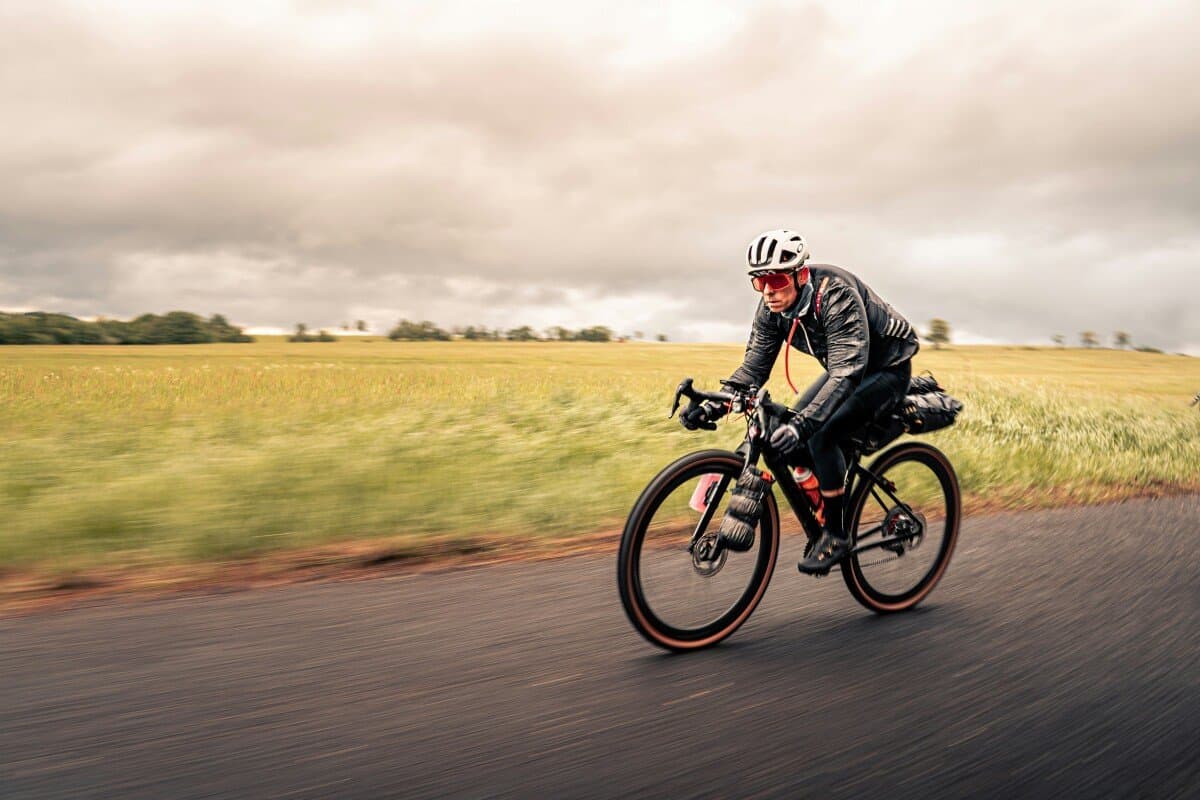
In a hurry? Get an aluminium winter bike with disc brakes and mudguards, fit 28-32 mm tyres, switch your lights on even during the day and dress in layers, gilet included. When you get home, get rid of the salt and grime before they do any damage.
Lots of riders hang up their road bike in November and pick it up again in March. That's a shame, because winter is exactly when you bank the kilometres that keep your legs turning in spring. And on a Sunday morning, the roads are a lot quieter.
Does road cycling in winter make sense?
Yes, and if you're preparing for the season it's actually the ideal time. Winter is base season: long rides, easy pace, plenty of aerobic base. The hard efforts come later, when the first races get closer.
It's also a good moment to look back at the year that's just ended and decide what to do in the next one. How many weeks until your first gran fondo? Starting from there helps you avoid the rush to go fast straight away.
Staying at home, or getting on the turbo trainer, makes sense mainly when there's ice or snow on the road and when the thermometer drops well below zero. Even a few degrees above that, though, if there's a risk of frost you're better off not going out.
The winter bike: what it is and why it pays to buy it used
In winter the roads are often covered in salt, grit and water, all of which can speed up wear on your drivetrain, hubs and bearings. That's why many cyclists keep their carbon bike warm and dry until spring and ride a bike dedicated to the cold months, tougher and cheaper.
What should it have? An aluminium frame, practical and generally more affordable. Mudguard mounts, so you can fit full-length fixed mudguards, which protect far more than clip-on ones. Clearance for tyres of at least 28 mm, ideally 32. And if possible disc brakes, which give more consistent braking in the wet and are easier to modulate.
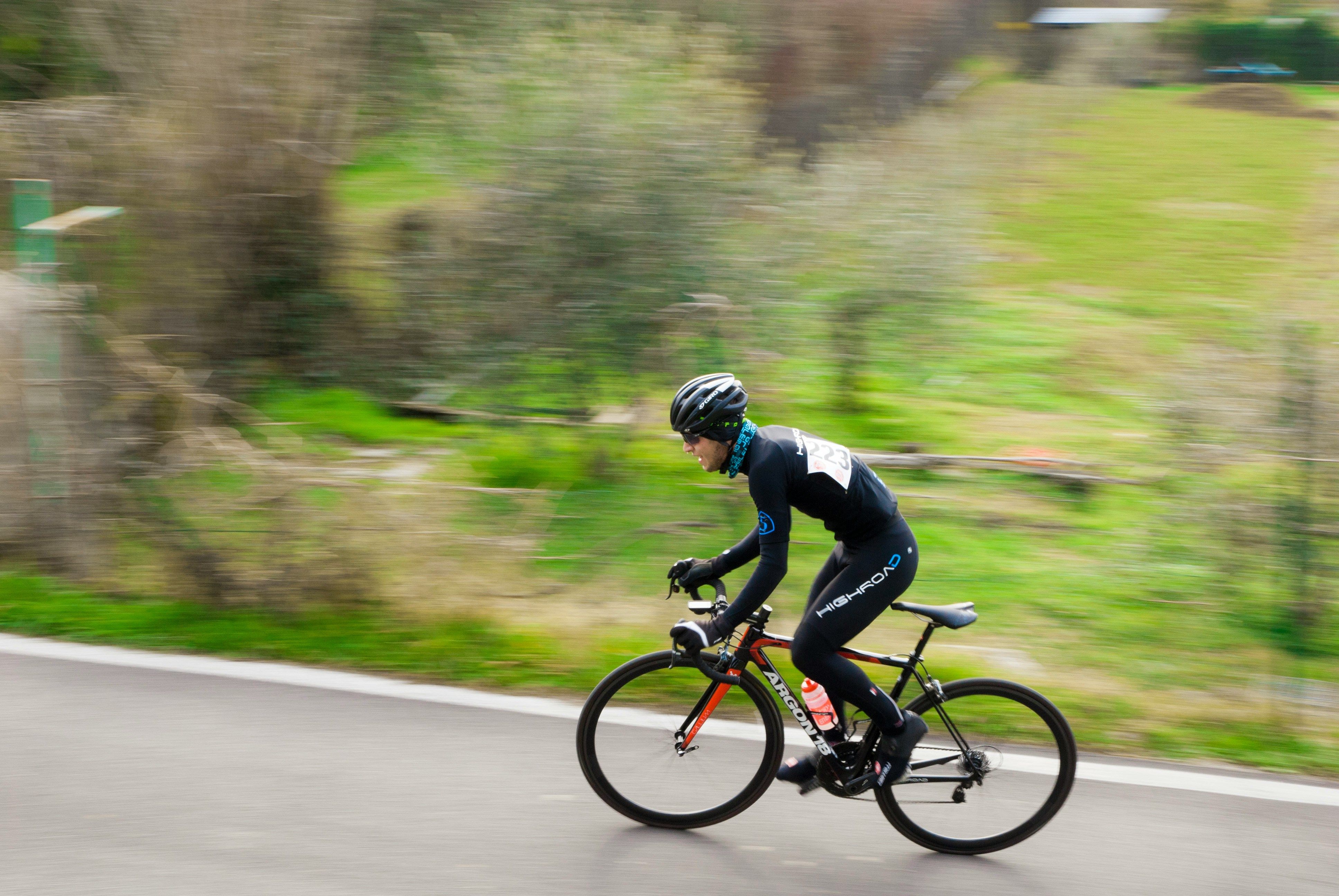
Buying one new makes little sense. By the end of winter it will have racked up plenty of kilometres, and doing that to a bike fresh out of the shop hurts a bit. Bought used, it costs less and you can treat it without too much fuss. The only compromise is that it's heavier and less responsive than a race bike, but in January you're not riding a time trial.
Three road bikes to look for second-hand
The Trek Domane AL is an aluminium endurance bike with mudguard mounts, comfortable even on long rides. Check out all Trek Domane bikes on Bikeflip →
The Giant Contend AR has a comfortable geometry and room for wide tyres, just what you need on battered winter tarmac. Browse all Giant Contend bikes on Bikeflip →
If your budget is tight, the Cube Attain is simple, tough and has the right mounts for mudguards. Discover all Cube Attain bikes on Bikeflip →
What to check before buying a used winter bike
A cheap bike isn't necessarily a bargain. If after two rides you have to replace the chain, cassette and brake pads, the savings disappear fast.
Before buying, check the condition of the drivetrain, ask when it was last serviced and make sure the wheels, headset and bottom bracket don't have any odd play. Above all, look at how much tyre clearance there is: it's not enough for the frame to take 32 mm tyres, there also has to be room for mudguards. This varies a lot between models and model years, even on the same bike.
Between two used bikes at the same price, go for the one with components in good condition and already ready for winter. You might spend a little more up front, but you won't have to take it to the mechanic before you've even started riding.
Good to know: if you buy from a private seller, with Bikeflip's Buyer Protection the payment is held until the bike has arrived and you've been able to check that it matches the listing, in line with the terms of the service. Refurbished bikes sold by professionals also come with at least one year of warranty. Browse all road bikes →
How to get your road bike ready for winter
Tyres
They're your only contact with the road, and in winter the road is wet, dirty and full of debris. Switch to wider tyres, between 28 and 32 mm, if your frame allows it. You gain comfort and can fine-tune your pressure better, which matters a lot in the wet. If you can, set them up tubeless: you reduce the risk of the classic pinch flats, and the sealant can plug many small punctures. And choose a durable compound with good puncture protection.
One detail many riders overlook is pressure. Pumping your tyres to the max doesn't mean going faster, especially on rough tarmac. With a pressure suited to your weight, your tyres and your wheels, the bike absorbs bumps better and keeps contact with the ground more easily. There's no single number that works for everyone, so check the manufacturer's recommended values and experiment a little without going below the safety limits.
Mudguards
If there's one thing to fit straight away, it's these. They keep much of the spray and salt off the bike, keep you dry for longer and, above all, don't give the rider on your wheel a shower. Anyone who's ended up behind a mate without mudguards in the wet knows what we mean: the spray hits you in the face and you can't see the road anymore.
If your frame has no mounts, there are quick-release models or small mudguards that attach under the saddle. Before buying, check how much clearance there is between tyre and frame.
Lights
In winter they should be on during the day too: under grey skies and in the low afternoon light, a cyclist is hard to see. Up front you need a properly powerful white light, and today even affordable commuting lights do the job. At the rear at least one red light, ideally two, using the modes allowed by the law. Wearing bright colours also helps a lot, as do a few reflectors on your legs and feet, which stand out more because they move.
What to wear for road cycling in winter
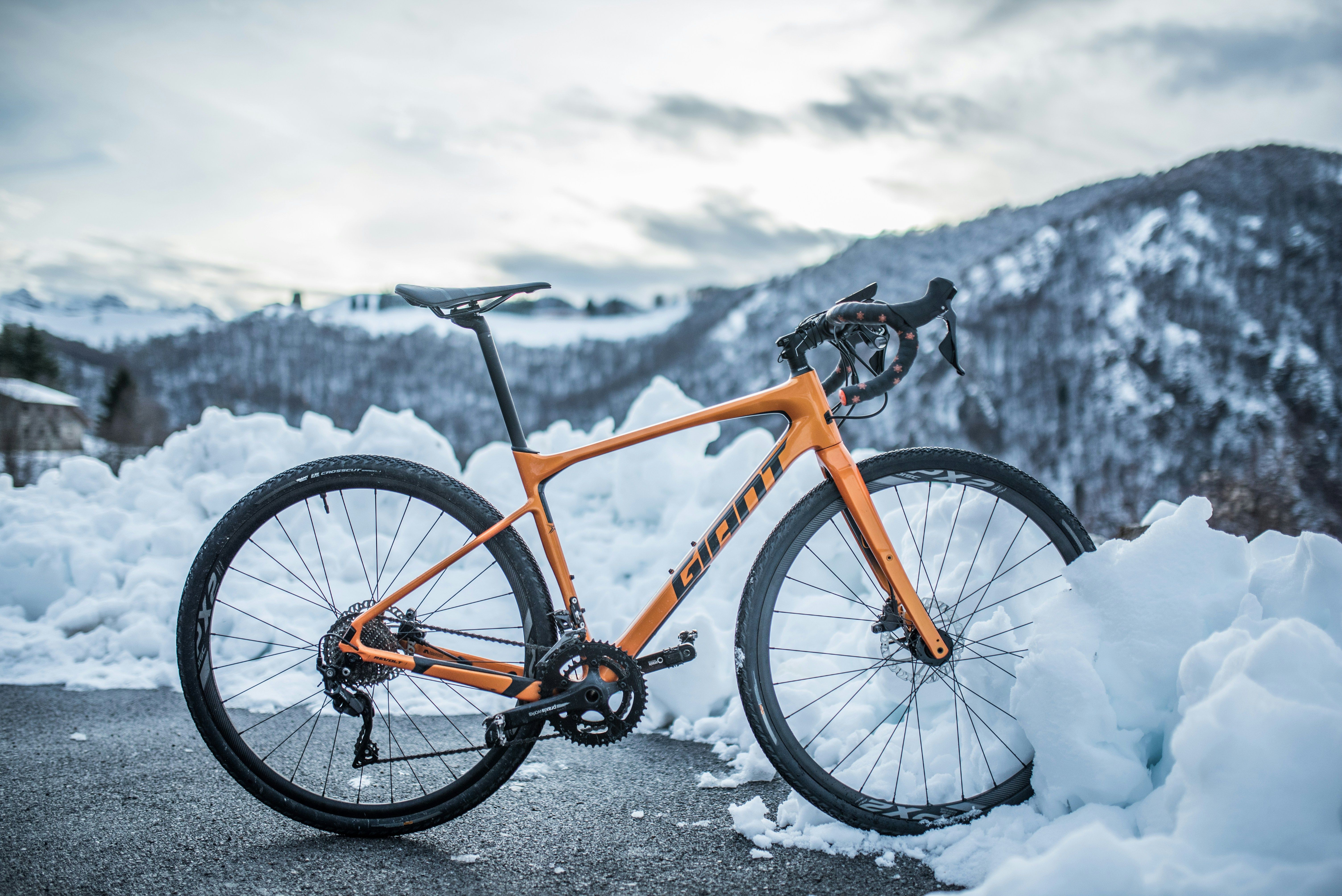
On the road you go faster than on an MTB, and the wind on a descent chills you in minutes. So here too, layers are the way to go. Underneath, a long-sleeve thermal base layer, ideally merino, which helps manage sweat. On top, a long-sleeve jersey, heavier or lighter depending on the day. On the outside, a waterproof shell can be enough for a hard two-hour ride, while for long rides a warmer softshell is better. For your legs, winter bib tights with a chamois.
If you're wondering where to start, here are three brands worth keeping an eye on.
Assos is Swiss and one of the historic names in cycling clothing, with a very complete winter range. Discover Assos →
Pas Normal Studios was born in Copenhagen and combines technical gear with a minimal, recognisable style. Discover Pas Normal Studios →
MAAP comes from Melbourne and focuses on unusual designs and colours, without giving up on performance. Discover MAAP →
They're high-end pieces: if you want to spend less, look for them second-hand on Bikeflip too. Browse clothing →
Then there's the gilet, in our view the most underrated item in the whole wardrobe: you unzip it or take it off when you start warming up, and put it back on before the descent. It takes up little space and saves your day. What you want to avoid is reaching the top of a climb soaked in sweat and diving straight down. Ten minutes of descending in a damp jersey is all it takes to feel terribly cold, even if you felt great just before. Better to stop for a moment, zip up your jacket and put on a windproof layer before setting off again.
Hands, feet and head
Warm, waterproof gloves, but not so thick that you can't feel the levers. Overshoes, or proper winter shoes if you ride often. A thermal skull cap and a neck warmer you can pull up to your nose when it's really cold.
A tip that sounds obvious but works: get everything ready the night before, clothes, bottle, bars and bike already checked. At seven in the morning, in the dark and cold, it's the best way not to find excuses.
How to ride safely on winter tarmac
In winter you often don't see the danger. It's wet leaves on corners, frost on shaded stretches, bridges that freeze before the road around them. The basic rule is to avoid sudden movements: brake and steer smoothly and slow down before the corner, not when you're already in it. Bridges and shaded areas are the first to freeze and the last to thaw, so take it easy there even if the rest of the road is dry. When temperatures are close to zero, it's better to stick to routes you know. And ride assuming drivers see you less well than you see them, even with lights and a reflective jacket.
In winter your route changes too, not just your clothing
There's one thing that makes more difference in winter than you'd think: choosing carefully where to go. A sunny climb and a road through the woods can feel like two different seasons, even if they're only a few kilometres apart.
Before setting off, don't just look at the temperature. Check the wind (for example with Windy), what time you'll reach the highest sections and how long you'll spend in the shade. It's better to go out once the sun has warmed the tarmac a little and, on the coldest days, to avoid roads that stay damp until late afternoon.
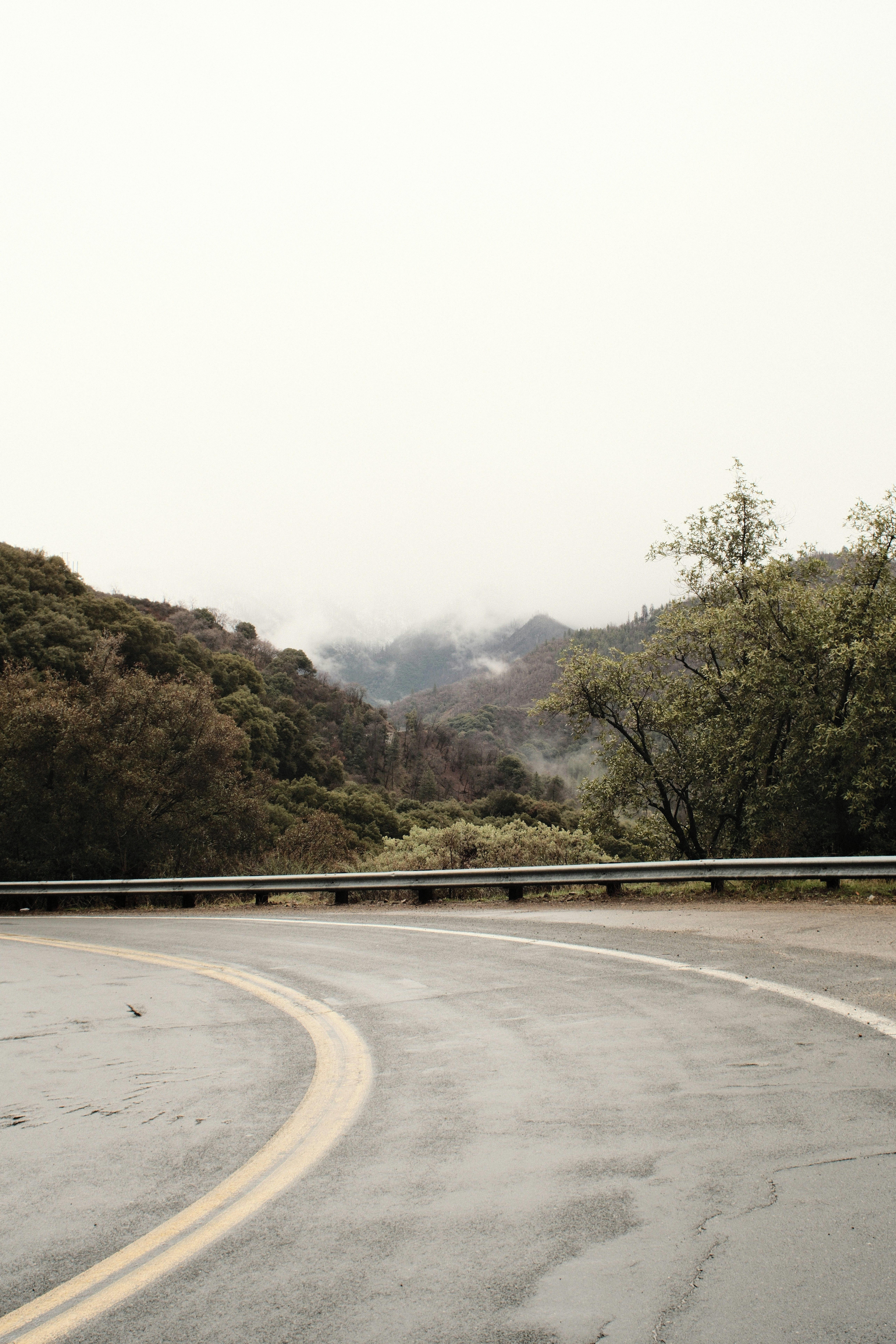
Another trick? Don't necessarily save the longest climb for the end. When you're tired and sweaty, twenty minutes of descending can become the worst part of the ride. And if the weather is uncertain, choose a route that lets you cut it short and head home without having to complete all the planned kilometres.
Virginia Cancellieri's advice: eat before you get hungry
You sweat in the cold too, you just feel less thirsty. An insulated bottle of hot tea and something sweet in your pocket help you avoid running out of energy. But there's a mistake many cyclists make, especially on rides lasting several hours: waiting until they're hungry before eating.
Virginia Cancellieri, a cyclist from Liguria and Bikeflip ambassador who is used to long distances, talks about it too. In an interview, discussing the most common mistakes in endurance riding, she said: “Waiting until you're hungry to eat. It's the biggest mistake of all.”
Why? When you're already bonking, an energy bar won't put you right instantly. Energy needs time to become available, and recovering becomes much harder. Better to eat regularly, without waiting for the first dip in energy. In winter there's an extra problem: with thick gloves it's not that easy to open a wrapper or dig around in your pockets. Keep at least one snack within easy reach and choose foods you already know, without experimenting on a long ride.
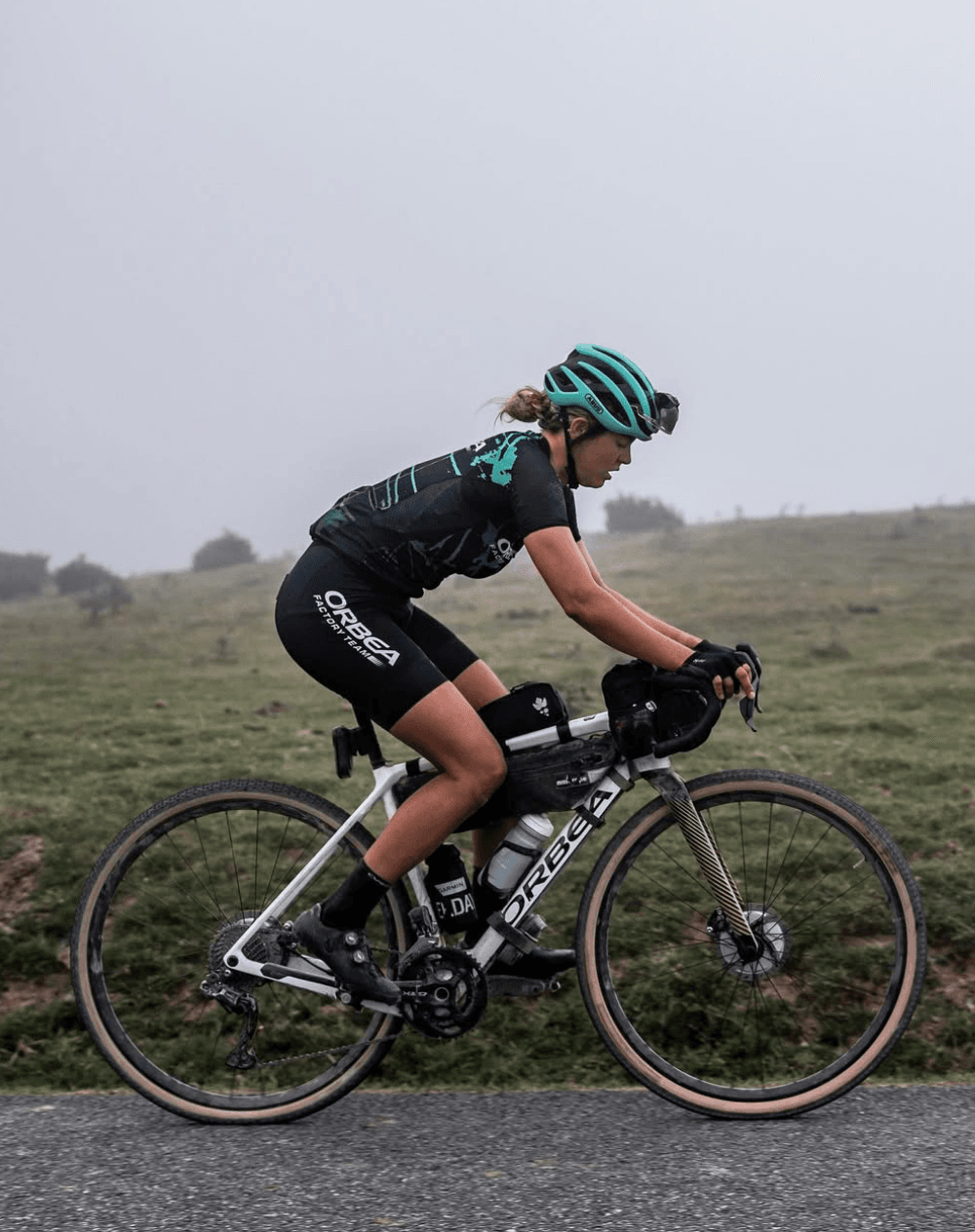
Virginia Cancellieri during the Basajaun ultracycling race in 2022.
When you get home, get rid of the salt
Salt is the real enemy of a winter bike. After every ride on gritted roads, give it a wash with warm water and a bike cleaner. No pressure washer aimed straight at hubs and bearings, though: you risk doing more damage than the dirt you're trying to remove.
Then clean and lube the chain. Also take a look at your brake pads and rotors, because sand and grime can speed up their wear. It's just a few minutes of maintenance, but it's the simplest way to reach spring with your drivetrain still healthy.
Outdoors or on the turbo trainer?
This is where cyclists split into two camps: those who live on their smart trainer all winter and those who wouldn't get on one even under torture. For most of us, the answer lies somewhere in between.
The turbo trainer is perfect when it's pouring, when it's freezing or when you only have an hour: indoors there are no traffic lights or stops, and that hour pays off. On dry days, though, it's worth going out, even for short rides. And at least once a week try riding in a group: if someone is waiting for you at the café at nine, getting up is much easier.
And you don't need to ride a hundred kilometres every Sunday to be in shape for spring. During the week you can use the turbo trainer for a few shorter, structured sessions, saving the long, easy base rides for the weekend. Being consistent is much better than doing four hours in the cold once and then skipping training for the rest of the week.
If you have time left over, a bit of gym work for legs and core. You'll feel the difference in spring.
And remember to recover. In the same interview, Virginia Cancellieri also talks about how easy it is to underestimate rest when you love sport. Training all the time doesn't necessarily mean training better. Every now and then, a day off the bike does more good than another hour on the trainer.
Riding in the warmth: where winter is kinder
Sometimes the simplest way to beat the cold is to go where it's less cold. Pros do it every year with their winter training camps, but even weekend riders can treat themselves to a few days in the sun.
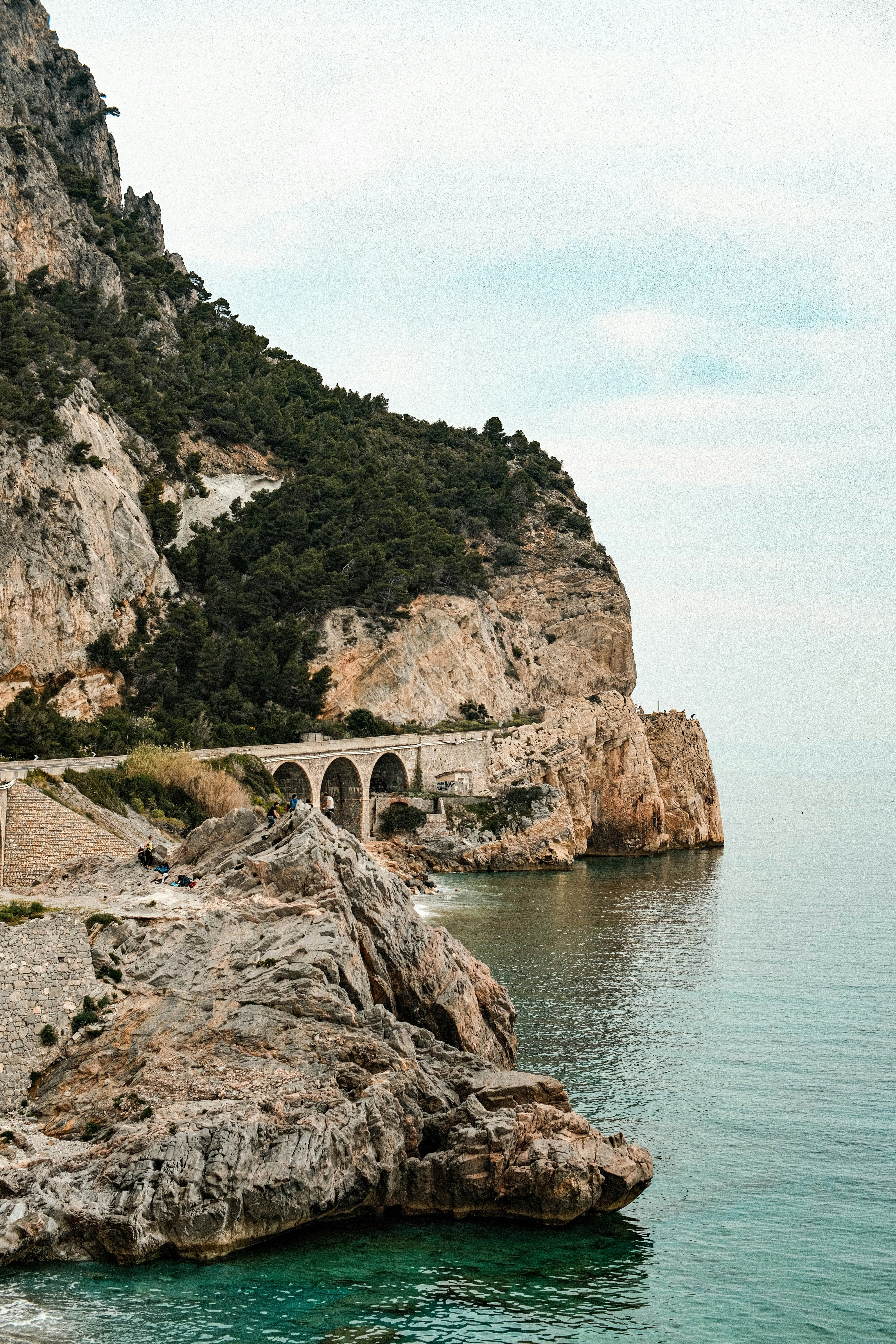
Liguria
Between sea and mountains, the Ligurian coast has mild winters and climbs that start practically from the beach. It's home to Virginia Cancellieri, who lives in Finale Ligure and rides on the road and gravel. Around here you can start from the seafront and find yourself inland after just a few kilometres. That's one of the advantages of Liguria: if the weather is good, you can choose between an easier ride along the coast and a climb with a sea view, without having to drive to reach the mountains.
But winter makes itself felt here too. Ten degrees and sunshine by the sea doesn't mean you'll find the same conditions a few hundred metres higher up. The wind can change quickly, the inland roads stay colder and a long descent can make you regret leaving your gilet at home.
The beauty of it, though, is being able to choose your route based on the day. And rediscovering the pleasure of riding outdoors when elsewhere the only alternative seems to be yet another session on the trainer.
How to take your bike with you
With Bikeflip Move you can ship your bike door to door across Europe, insured and protected by the patented packaging. It's waiting for you at your destination, without dragging it onto trains and planes.
Conclusion: spring starts now
You don't need the most expensive bike to ride on the road in winter. You need a reliable bike, perhaps aluminium with disc brakes, wide tyres and mudguards, a few extra lights and a little care on wet tarmac. You also need to learn to choose your routes, eat before you get hungry and know when it's better to recover instead of going out at all costs.
Every kilometre you bank now, you'll find in your legs in March.
When the good weather returns, the winter bike can stay in the garage until November. Or you can sell it to someone else on Bikeflip, with guaranteed payment and insured shipping in the Bikeflip Box.
Looking for your winter bike? Find it among the used road bikes on Bikeflip →
Frequently asked questions about road cycling in winter
Can you ride a road bike in winter?
Yes. With mudguards, wider tyres, lights and the right clothing, you can ride well in the cold too. With ice or snow on the road, though, the turbo trainer is the better choice.
What is a winter bike?
It's a second road bike, cheaper and easier to maintain, that you ride in the cold months to spare your good bike the wear. It's often aluminium, with disc brakes and mudguard mounts.
What tyres should you use on the road in winter?
Tyres between 28 and 32 mm with good puncture protection. With tubeless you can reduce the risk of some punctures and run a pressure suited to the conditions, always within the limits of your tyres and rims.
Do you need mudguards on a road bike?
In winter, yes, especially if you often ride in the wet. They protect the bike from spray, keep you drier and don't soak the riders behind you. If your frame has no mounts, there are quick-release models.
How do you choose a route for a winter ride?
Go for roads that get the sun and avoid stretches that are always in the shade, where ice can linger. Check the wind and temperatures higher up too and, when the weather is uncertain, choose a ride you can easily shorten.
Is it better to use the turbo trainer or ride outdoors?
Best to use both: the trainer when it's pouring or freezing, the road when it's dry. Riding in a group helps a lot to avoid skipping rides.