Mountain bike buying guide 2026: new or used, what to check and how much to spend
How I choose a mountain bike, what I check on a used one and how much I'd really spend in each category. So you don't get ripped off.

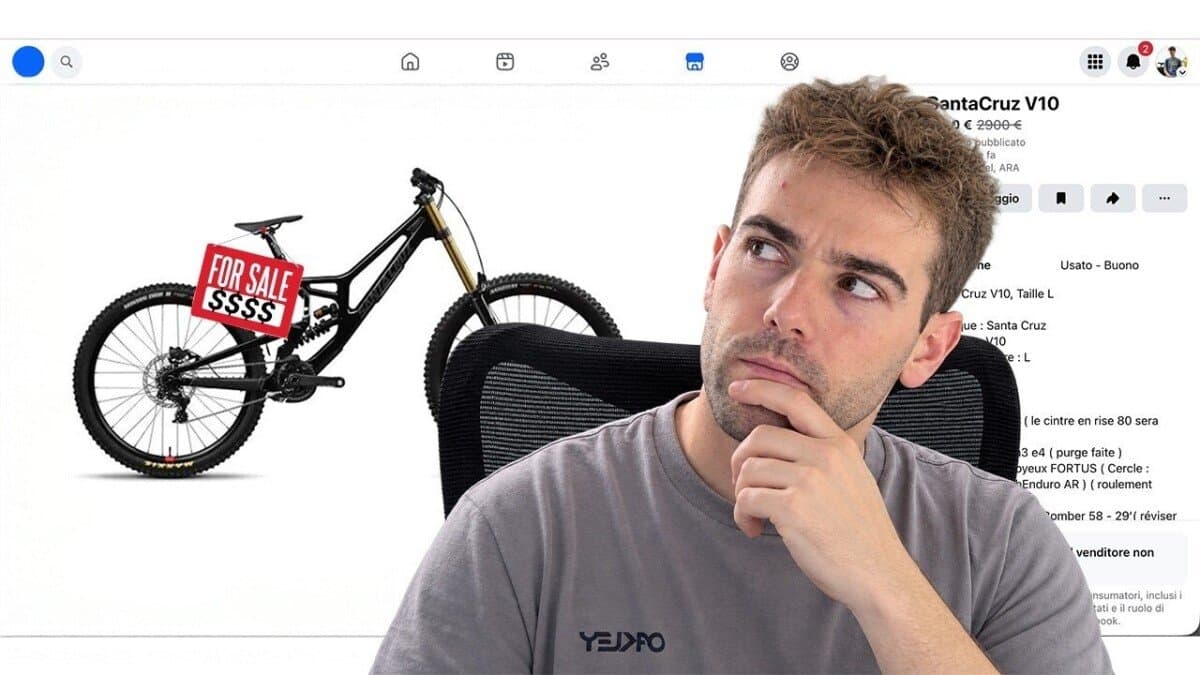
In short
If I had to sum it all up in one sentence: the right mountain bike isn't the best-looking or the most expensive one. It's the one you'll use 90% of the time, in your size and at the right price.
Hardtail if you ride easy trails and want to learn.
Trail if you want more comfort on technical trails.
Enduro if you love steep, rough terrain and don't mind climbing.
Downhill only if you ride bike parks.
Dirt Jump only for jumps and tricks.
On a used bike I always check the frame, suspension, drivetrain, brakes, wheels and size. And I'd recommend setting aside part of your budget for a helmet, protection and maintenance.
When the right bike is the wrong one
I learned this lesson when I was 12, maybe even younger. My first bike for jumping was a € 120 supermarket bike. Super heavy, with gears that fell apart while I was riding and rim brakes. A real piece of junk. One day the front wheel even came off.
That's when my parents realised I needed something better, and we ended up with a Specialized. A trusted brand, you'd think. It felt awesome, until the first jumps: even on tiny ones the fork bottomed out on the ramp, and all my pop disappeared.
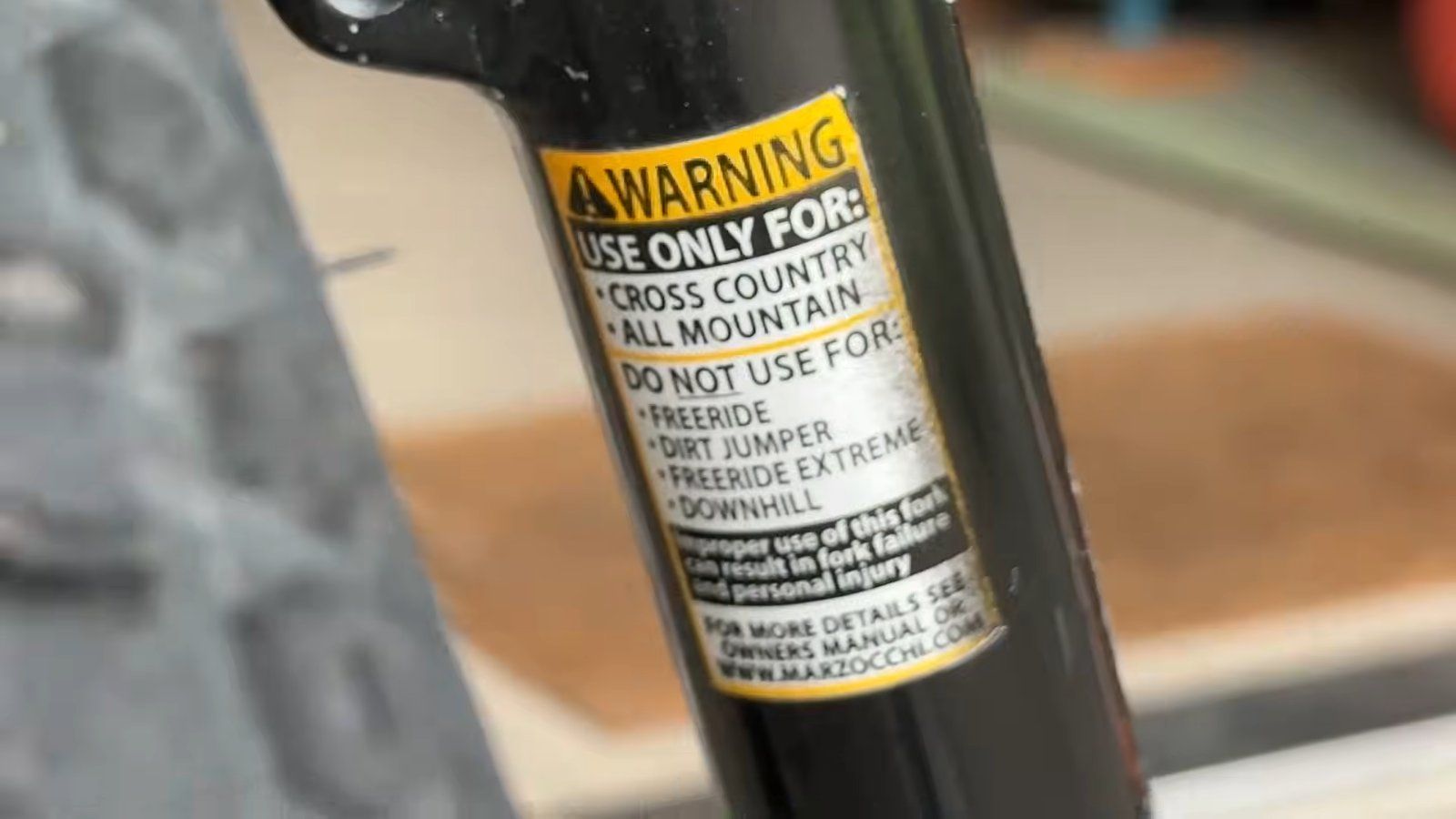
One day I noticed a sticker on the back of the frame: do not use for freeride or dirt jumping. Exactly what I wanted to do. It was a cross-country bike for kids, and that's when I realised the seller had pretty much ripped my parents off. After just three years I replaced it with a real dirt jump bike with a proper fork.
The problem wasn't the quality of the bike. It was the wrong bike for what I needed it to do. With this guide I want to help you avoid the same mistake.
Which mountain bike do you really need?
The first mistake I see almost every beginner make is buying a bike because it looks amazing. An enduro bike with 170 mm of travel looks great in the garage. But if you use it for road rides with friends, to commute or to pick up bread, you're spending thousands on something you don't need.
The right question isn't "which bike looks best?", but "which bike will I use 90% of the time?". Choose based on the trails you actually ride, not the ones you imagine.
Category | Suspension | Best for | Good to know |
|---|---|---|---|
Hardtail | Front fork only | Easy trails, first corners, first small jumps | Affordable, few parts to break, little maintenance |
Trail | Moderate travel, hardtail or full suspension | More technical trails, with more comfort | The full-suspension version moves you into another price range |
Enduro | 160 mm and up | Steep, rough, technical trails | Heavier and harder work on climbs |
Downhill | 200–220 mm, 29" or mullet wheels | Bike parks, descending only | Practically impossible to pedal uphill |
Dirt Jump | Almost locked fork, 26" wheels | Jumps, tricks, street | Tiring to pedal for long |
Hardtail: the most sensible place to start
If you want to ride easy trails and learn a few corners and small jumps, I'd recommend a hardtail. It only has a suspension fork up front, it's affordable and it has few parts that can break. Less maintenance, more time riding and having fun.
Trail: more comfort when the trail gets tricky
If you want to start on slightly more technical trails, go for a trail bike. Its travel isn't excessive, but it gives you more comfort. It also comes in a full-suspension version with a rear shock: more control, but also a different price range than a hardtail.
Enduro: for riders who already know they love descending
Enduro bikes are for riders who already know they love dropping into steep, rough, technical trails. They start at 160 mm of travel. Bigger suspension and stronger rims make them heavier than a trail bike or a hardtail: on climbs they take serious physical effort.
Downhill: bike parks only
Downhill bikes came before enduro bikes. They're super tough, with 200 to 220 mm of travel and 29" or mullet wheels (29" front, 27.5" rear). They're made for one thing only: going down, in a bike park. Uphill they're impossible to pedal.
If you're planning a bike park season, take a look at Bikeflip's guide to the best bike parks in Europe in 2026.
Dirt Jump: my favourite
Dirt jump bikes are my favourite category. They're hardtails with 26" wheels, super compact, very light and very stiff, with an almost locked fork. They're made for jumping, tricks and street riding. Loads of fun. But take it from me: after riding for a while they're exhausting, because they just don't roll.
If you want to understand travel, wheels and materials better, read Bikeflip's guide to the best beginner mountain bikes for 2026.
New or used?
Once you know what you need it for, here comes the question everyone asks me: should I buy new or used?
A cheap new bike seems like the safe choice. In reality, for the same price you'll often find well-kept used bikes with much, much better components.
Buying used, though, doesn't mean buying the first bike that pops up in your feed with the nicest photo. I always follow this order:
I decide what type of bike I need.
I find my size.
I set a budget: this part is almost essential.
I look for a bike with a clear history, from a seller who seems trustworthy.
If you're not an expert, get help from a friend who knows bikes and mechanics. They can give you a more considered opinion, or even come along when you go to negotiate.
And ask the seller questions. A bike with a clear history and documented servicing may cost a bit more than one nobody knows anything about. But in the long run it's often the one that saves you money.
Good to know: if you want even more peace of mind, refurbished bikes on Bikeflip go through a 25-point check and come with a 1-year warranty.
What I check on a used mountain bike
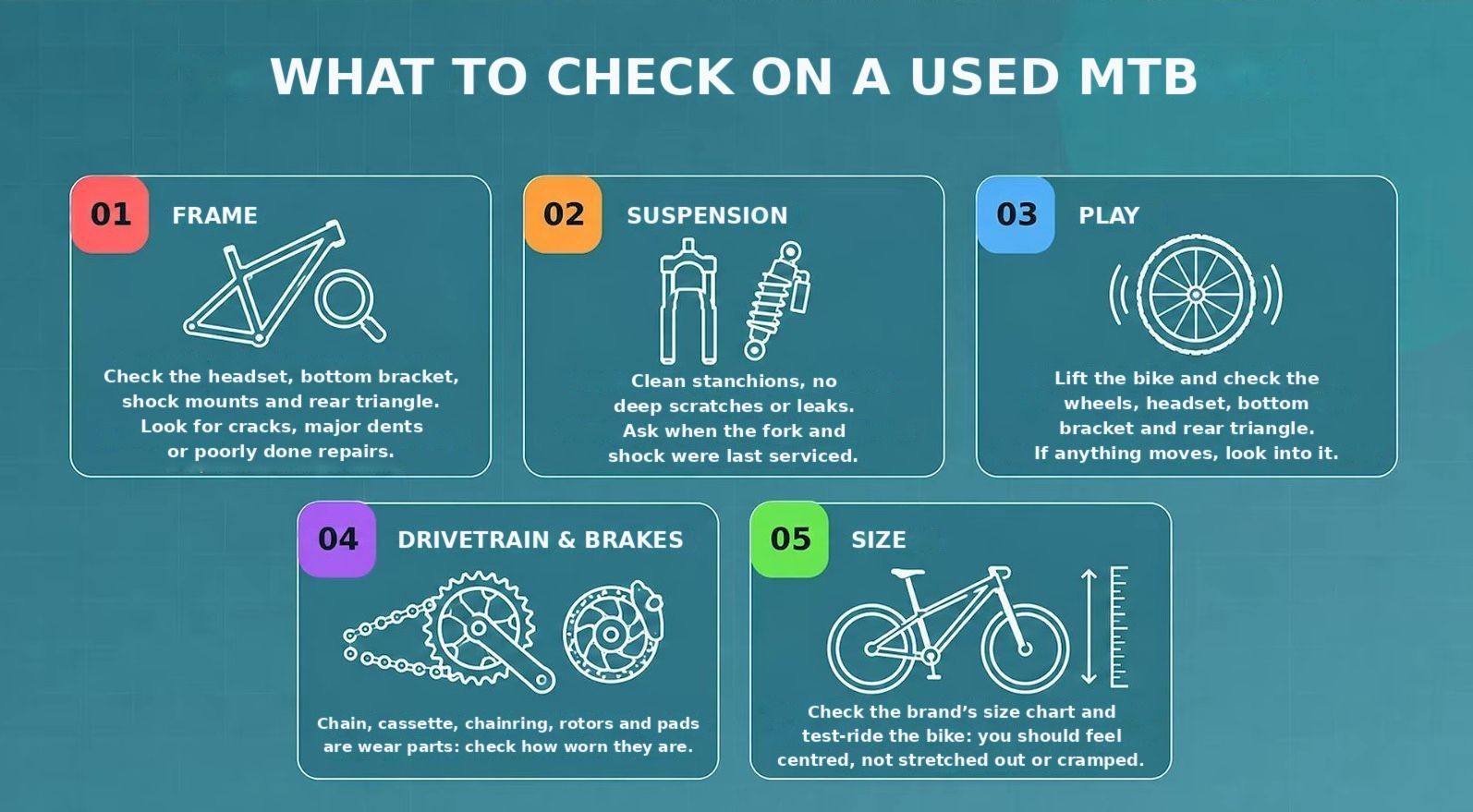
When you go to see a used bike, be wary of sellers who are in a hurry and check everything in detail. The most expensive surprises hide in the small things. This is the order I follow.
1. The frame
It's the first thing I look at, because everything else is mounted on it. I mainly check the area under the headset, which takes a lot of stress, and the area around the seat clamp. On full-suspension bikes I also check the linkage and rear triangle. The areas near the welds are where cracks appear most easily.
Good to know: if the bike is dirty and you see an odd-looking mark, try cleaning it. Mud can hide a crack.
2. Rear-end play (on full-suspension bikes)
I grab the rear triangle and push it sideways. If you feel play in the bearings and bushings, factor it in: it's maintenance that can get expensive.
3. Suspension and dropper post
A dropper post works like half a fork, so for me it deserves the same attention. I check that there are no scratches or scoring on the stanchions, that the lowers aren't cracked and that there are no oil leaks. Then I move the dropper sideways: it shouldn't have too much play.
Try all the adjustments. Play with them, turn them, don't worry: nothing will break.
4. The drivetrain
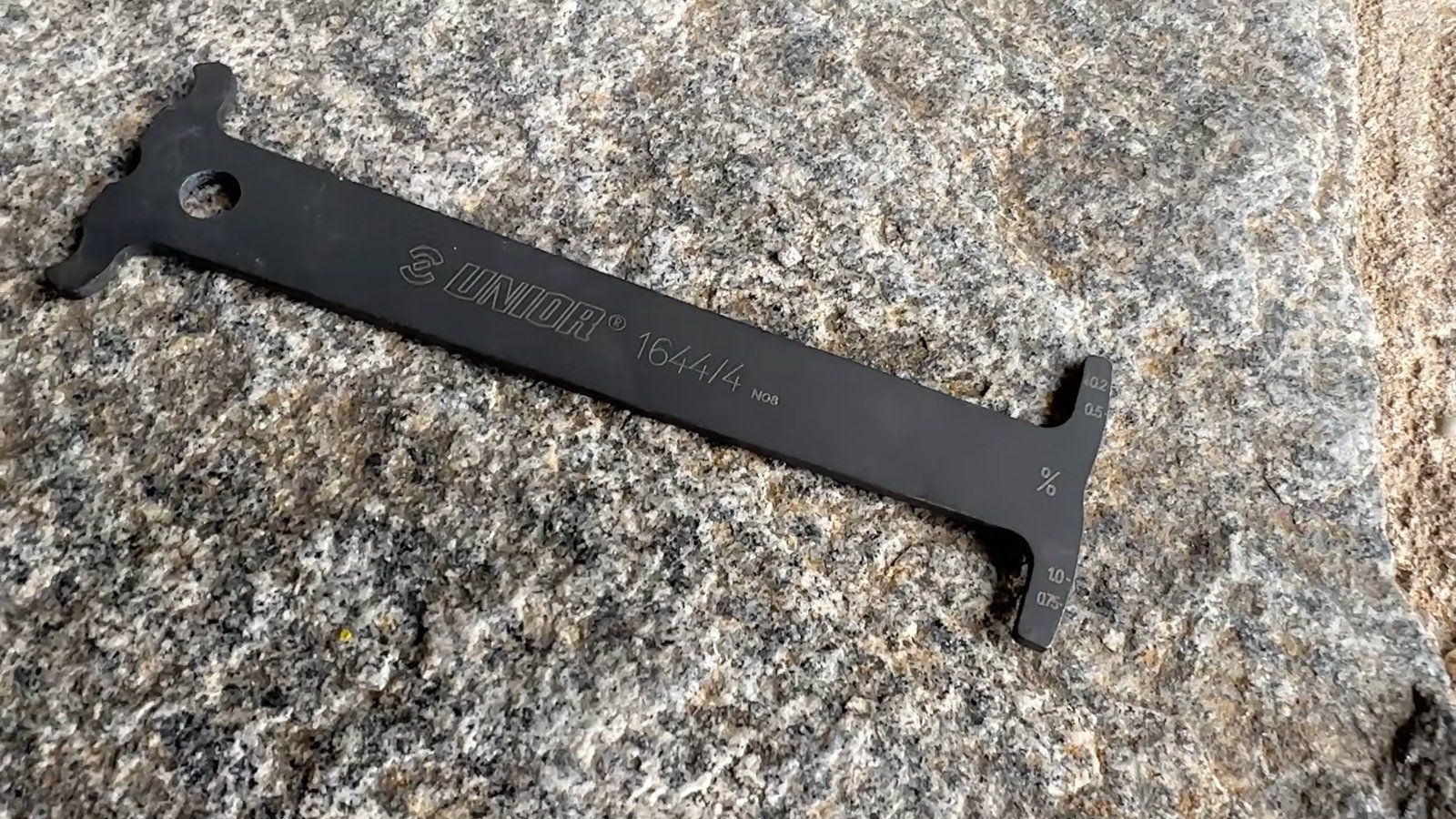
Many people don't know this, but a chain stretches over its lifetime, sometimes quite a lot. And in doing so it wears the teeth of the cassette and chainring.
To measure chain stretch you'd need a dedicated tool, which not everyone has. Alternatively, look at the individual teeth, especially on the chainring: with a single chainring it wears faster. If the gap between teeth has grown, the drivetrain will need replacing soon.
5. The brakes
I always check how much material is left on the brake pads. They wear quickly, especially on e-bikes.
6. The wheels
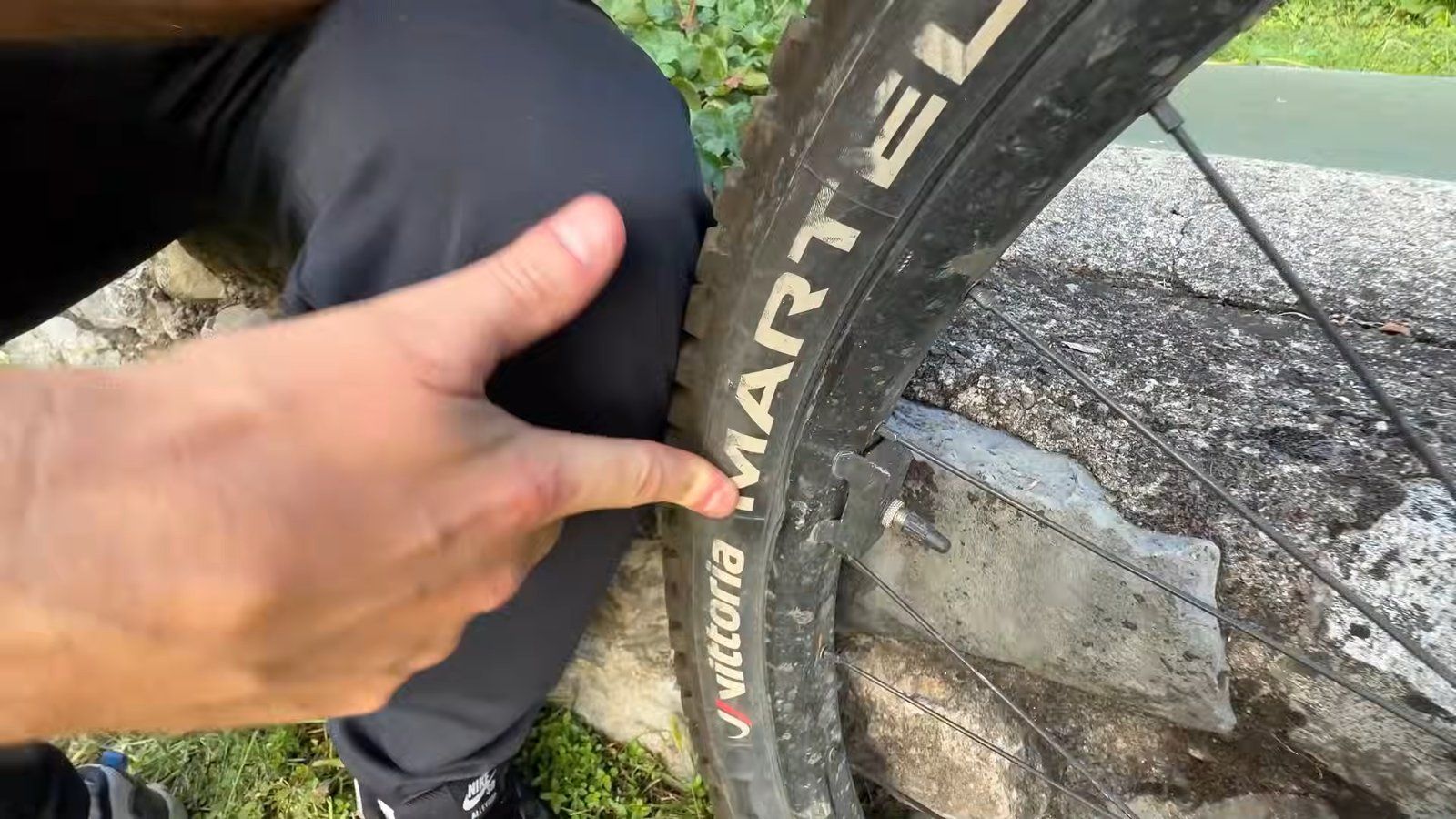
I spin the wheels: they should run true, with no obvious knocks. Then I look for dents in the rims. A dented rim may need replacing very soon, and with tubeless it can start losing air.
7. Size
Above all, look for a bike that's already your size. On an XXL that's too big for you, the bike becomes hard to handle. On an XXS you'll feel like you're on a kid's tricycle, and steep descents become a problem.
If you're usually an L, also look at M and XL and compare frame dimensions on the main brands' size charts. To find your way, read the bike size guide and the one on bike geometry on the Bikeflip blog.
Want a list to take with you? Here's the complete checklist for buying a used bike.
Where to buy your mountain bike
If you're buying new
This is the simplest route. You find the model you like online and, depending on the brand, buy it direct or from a dealer.
If you want to try before you buy, make the most of events with bike tests. The Bike Festival in Riva del Garda, the Italian Bike Festival in Misano or the demos in Finale Ligure are perfect chances to ride the latest models.
If you're buying used
You'll find everything online: wrecked bikes, worn-out bikes, scam listings. If you find a beautiful bike at a rock-bottom price, it's often because it doesn't actually exist.
Personally, I recommend Bikeflip. You'll find new and used bikes in every category, from dirt to enduro, from downhill to trail, plus components and clothing. In September 2026 there were more than 4,300 mountain bikes for sale.
The platform is built only for bikes, so the filters are designed for riders. You can filter by size, year, condition, components and price range, and get to the bike you want faster.
My advice: always compare three or four listings, even of different models or brands. Compare prices and components, and use the chat to ask sellers questions.
Payments and shipping are protected, so you won't get any nasty surprises. You'll find all the details on the Buyer Protection page.
Bikeflip Box and Bikeflip Go: your suitcase arrives with your bike
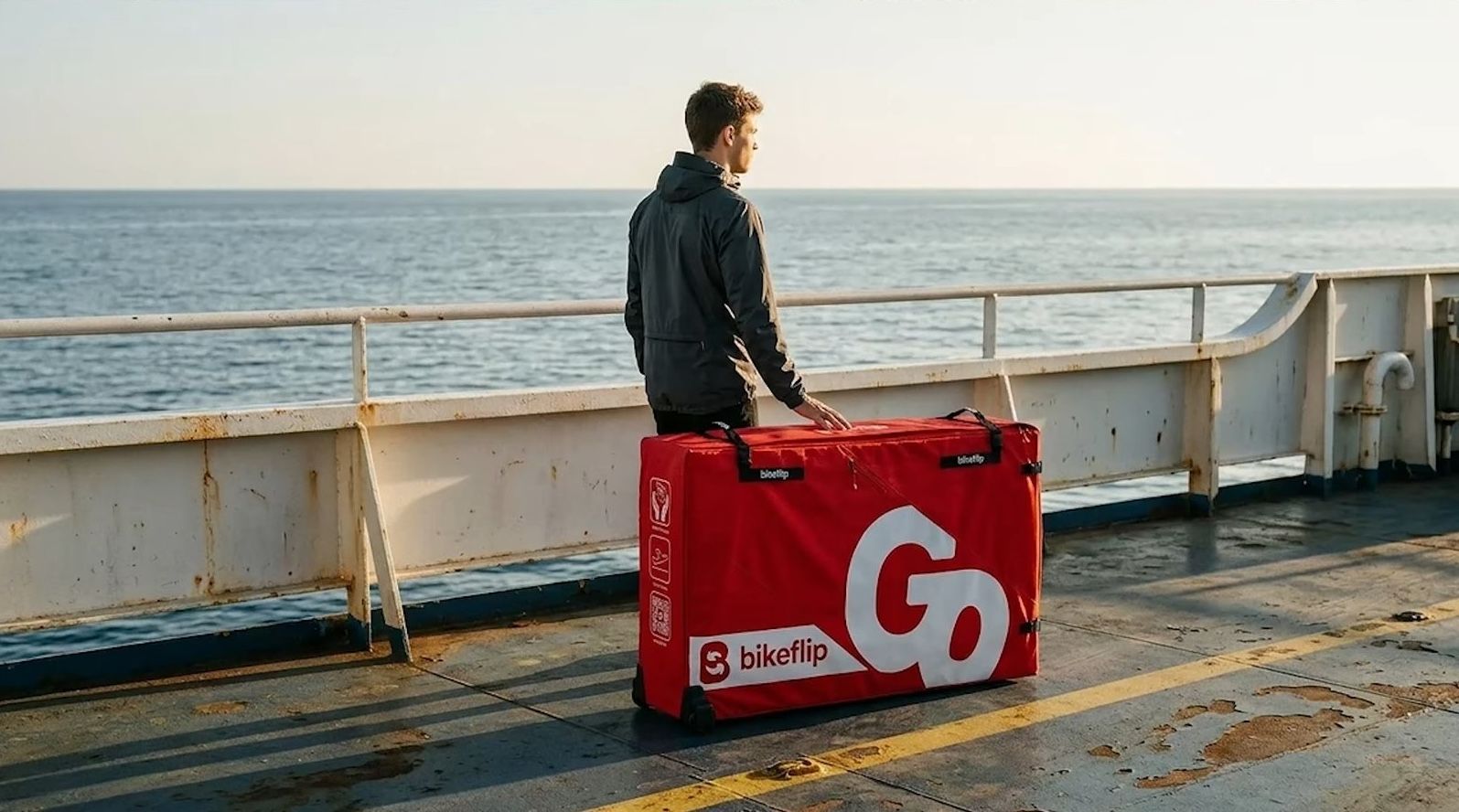
When the seller ships it, your bike travels in the Bikeflip Box. Don't throw it away: it's reusable, and you can use it for your own bike trips too.
Paired with Bikeflip Go, the water-repellent cover with wheels, it becomes a suitcase that's easy to take on a plane or train. I use it for my trips: once I arrive, Go folds up and disappears into a bag. Much better than spending hundreds of euros on a bike bag that's ready for the bin after two trips.
How much to spend on a mountain bike
It's the question everyone asks me: how much do I need to spend to get a decent bike? Here are the price ranges I use as a reference for each category. They're not price lists: the real price depends on year, components and condition.
Category | Used | New |
|---|---|---|
Hardtail | €500–1,000 | €800 to €1,500 and up |
Trail | from about €700 (hardtail) to €2,200–2,500 (full suspension) | €1,200 to about €4,000 |
Enduro | €1,500–1,700, around €3,000 for excellent bikes | from €2,500–3,000 up |
Downhill | €1,000–1,500 | from €2,000–3,000 up to €6,000–7,000 |
Dirt Jump | from €300–350 to €800–1,000 | €650–700 entry level, €1,200–1,500 top of the range |
E-MTB hardtail | from €1,000–1,500 to €2,000–2,500 | from about €1,800–2,000 |
E-MTB full suspension | €2,000–3,000, €4,000–5,000 for the best models | from €3,000 up |
One thing you should know: in the bike world there's no price ceiling. There are €18,000 models out there, but in my opinion they make no sense for most riders.
A few notes by category:
Enduro: these are now the most sought-after and most technologically advanced bikes. That's why new prices start high.
Downhill: they're less in demand than they used to be, because many riders prefer an enduro bike they can use for a bit of everything. You'll find good prices on the used market. But I'd never buy a €7,000 downhill bike.
Dirt Jump: some brands go up to €2,000, but for a jump bike I don't think it makes sense.
E-MTB: these days even for me an enduro bike without a motor isn't the same anymore. New ones are pretty expensive though, so buying used really makes a difference. Before you buy, read the guide to checking an e-MTB.
Budget under €1,000? Here are the best used mountain bikes under €1,000.
Good to know: include a helmet, protection and regular maintenance in your budget. A mountain bike gets used, gets broken and needs looking after.
Mistakes to avoid
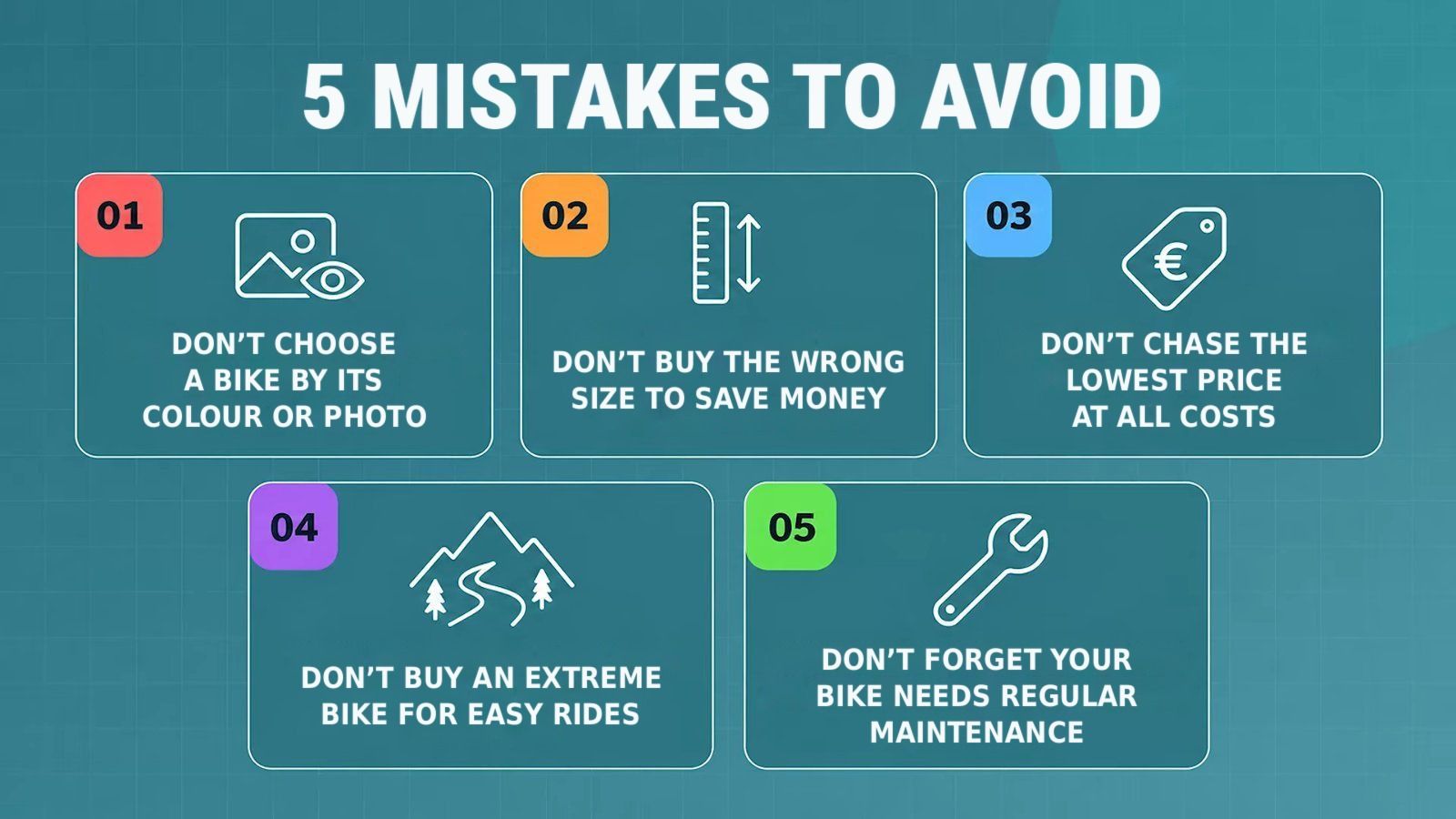
If you only remember one part of this guide, remember this:
Don't buy a bike because it looks good. Buy it because it's right for the trails you ride.
Don't buy the wrong size, even if the price looks like a bargain.
Don't chase the lowest price at all costs. A bike with a clear history is worth a bit more.
Don't buy an extreme bike if you ride easy loops. You'd pay a lot for a bike you can't make the most of.
Don't forget to budget for a helmet, protection and maintenance.
Frequently asked questions
Hardtail or full suspension to start with?
If you ride easy trails and want to learn, I'd say a hardtail: it costs less and needs little maintenance. If your trails are already technical, consider a full-suspension trail bike, and expect a higher price range.
How much does a decent used mountain bike cost?
You can find a solid used hardtail for €500–1,000. For a trail bike, prices start at about €700 for a hardtail and go up to €2,200–2,500 for a full-suspension bike.
What should I check before buying a used MTB?
Frame, rear-end play, suspension and dropper post, drivetrain, brake pads, wheels and size. And always ask for the service history.
Is an enduro bike OK for a beginner?
Only if you already know you love descending steep, technical terrain. It's heavier and harder work uphill, and it's wasted on easy rides.
How can I tell if a listing is a scam?
Be wary of prices that are too low and bikes without a clear history. Use a platform with protected payments and shipping.
Can I reuse the Bikeflip Box?
Yes. It's reusable and, with Bikeflip Go, it becomes a suitcase for travelling with your bike by plane or train.
In conclusion
Your first mountain bike doesn't have to be the most expensive, the best-looking or the most extreme. It has to be a sound bike, at the right price and in your size.
Above all, it has to be fun and easy to ride. That's what will make you want to get out on your bike more and more.
Save this guide and read it again before you go to see a bike. That way you'll arrive prepared and won't get ripped off. And if you want to know more about anything, let me know in the comments under the video.
See you on the trail!
Diego Caverzasi
→ Watch the full video on my YouTube channel (in Italian)
→ Browse used mountain bikes on Bikeflip
→ Not sure where to start? Try the Bike Finder